Artist highlight

Artist highlight
Top 5 Venice Biennale Highlights | Daria Borisova
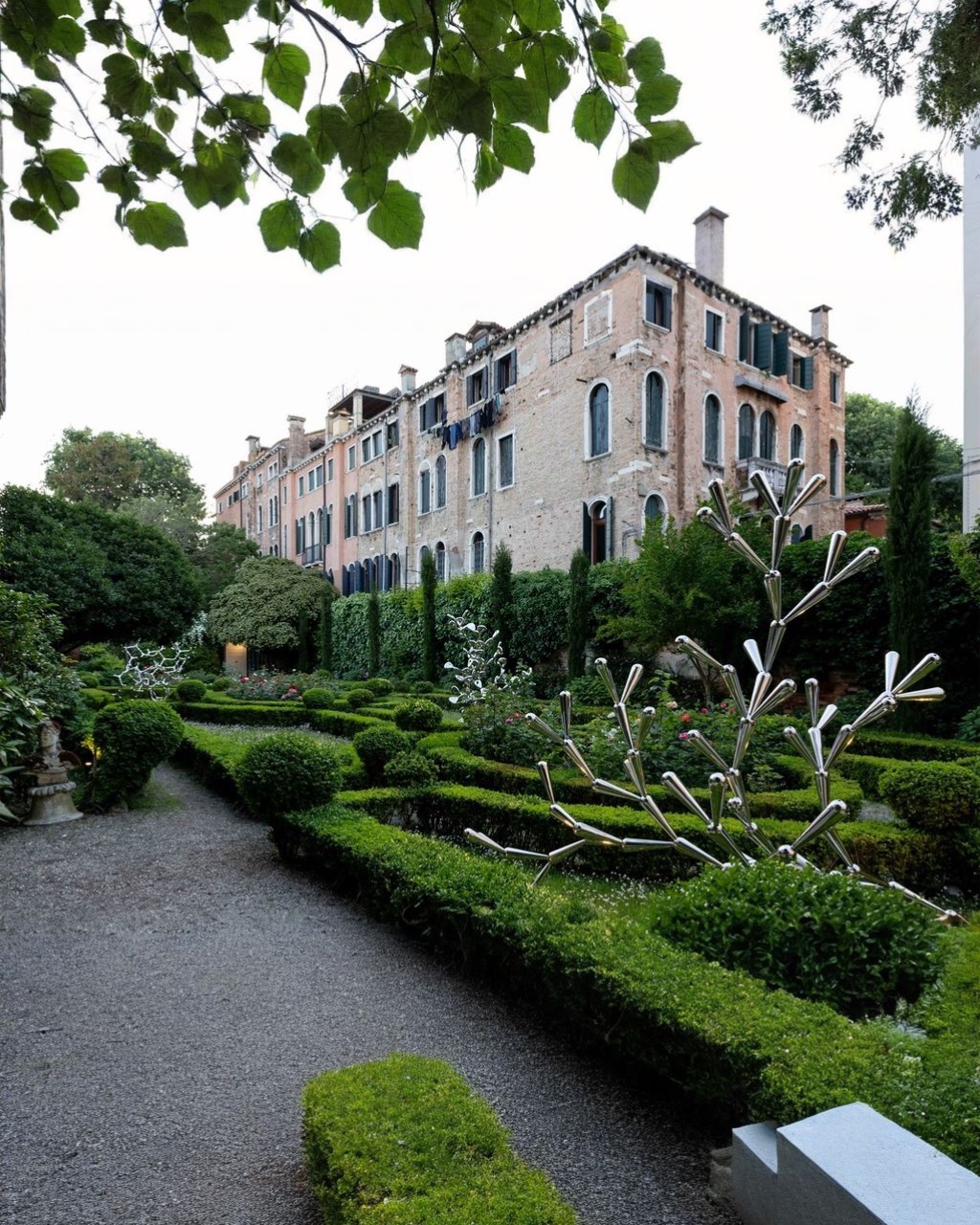
Loris Cecchni, Allochories, 2026, Palazzo Nani Bernardo, Dorsoduro, Venice. Until May 27 2026.
A spotlight on the Top 5 Venice Biennale Highlights. This week's Top 5 comes from Daria Borisova, a London-based curator, art advisor, and writer.
.jpg)
Photo credit Daria Borisova
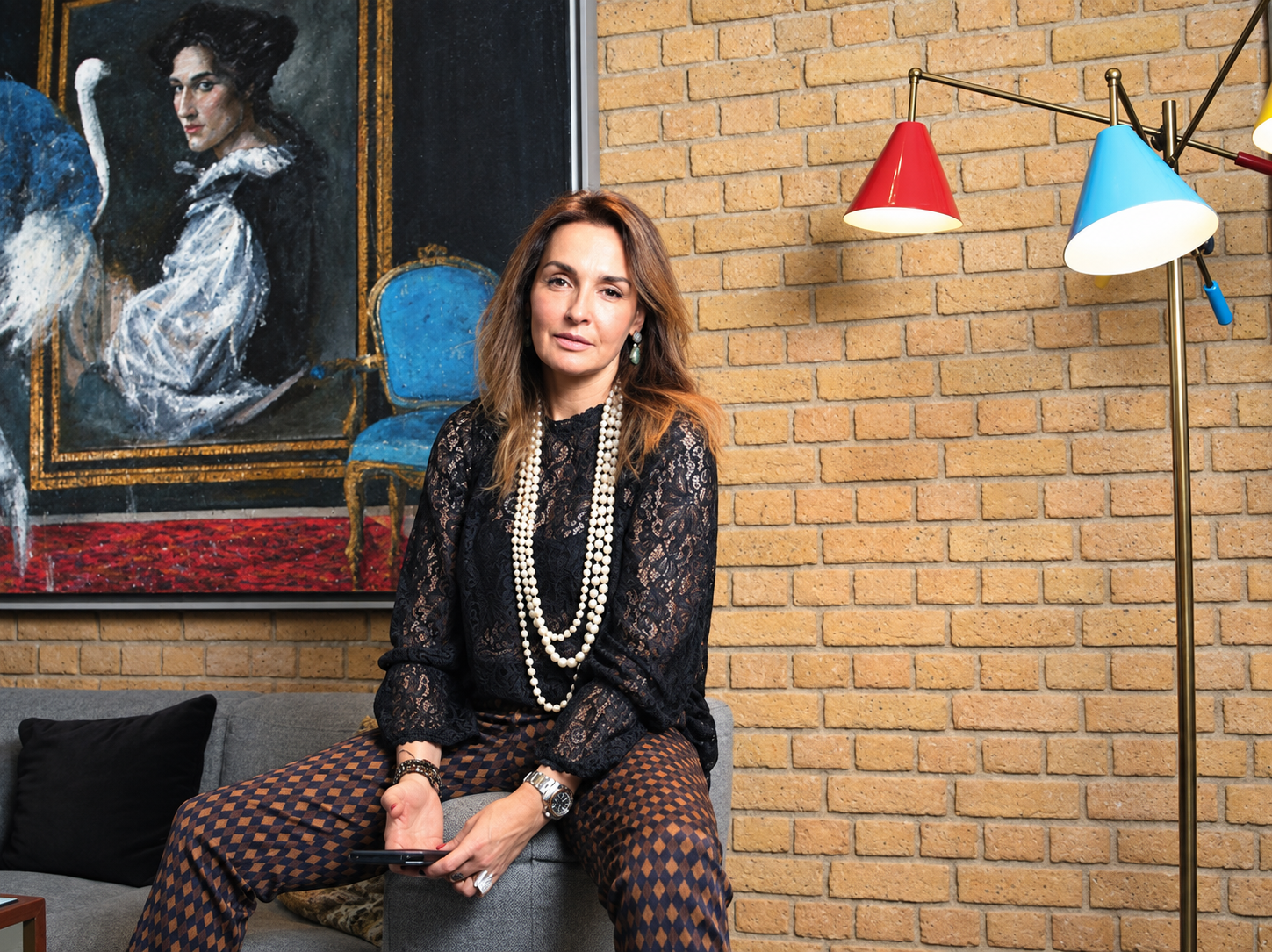
Daria Borisova
Daria Borisova is a London-based curator, art advisor, and writer. She focuses on young, emerging artists as well as established artists who inspire progressive understanding and promote lasting change. With an emphasis on transparency and education, she has built collections for prominent private and corporate clients and assists collectors in navigating the art world. Daria maintains relationships with international galleries, auction houses, foundations, museums, and various organizations.
Her recent curatorial projects include “The Open Wound,” an international group exhibition, and “Allochories,” a solo presentation by Loris Cecchini at Palazzo Nani Bernardo in Venice. She also curated "Fragments of Reality" at Vin Vin Gallery in Vienna and an installation by Andrés Reisinger at Golden Goose’s HAUS of Dreamers in Marghera, Venice. Additionally, Daria contributes to Mutual Art Magazine, where she interviews high-profile collectors and art market participants.
This week, Daria spotlights her Top 5 highlights of the Venice Biennale. In her own words: "A few places, exhibitions, and encounters that stayed with me. The Biennale is not really the point. The point is what the city does to artists who come here and decide to work with it rather than inside it. This year that happened in a handful of places I want to tell you about — all outside the official programme, all worth the detour."
The Open Wound
Palazzo Nani Bernardo, Dorsoduro
ARTSA
Until 27 May 2026
The Open Wound is a group exhibition of ten contemporary artists, transforming the historical building of the Palazzo Nani Bernando into an encounter between past and present. Bringing together the works of Von Wolfe, Boris Acket, Savannah Harris, KV Duong, Geoffroy Pithon, Ludovic Nkoth, Isabella Amram, Dennis Miranda Zamorano, Giuseppe Francalanza, and Naleye Junior, the exhibition engages the artworks with mirrored salons and ceremonial spaces to create a unique multilayered environment.
This is one of two exhibitions I co-curated this year with Selcan Atilgan. A shared vision, a shared dream - and this year, it actually happened. The setting is Palazzo Nani Bernardo - accessed from the Grand Canal, its rooms spanning the piano terra, a garden, and the piano nobile above. The cultural platform ARTSA transformed these ceremonial spaces into something more alive: contemporary works placed in direct conversation with frescoed ceilings, mirrored salons, and walls that have been holding history for centuries. Venice is not merely a backdrop here. The city - built on water, shaped by impermanence - becomes an active participant in what the exhibition is asking.
Ten artists. Ten completely different practices. What brought them together was precisely their refusal to speak in the same register. One traces the boundary between algorithmic process and oil paint; another moves between club culture and contemplative nature. Elsewhere: latex stretched across door-shaped frames, carrying colonial history and queer desire in the same trembling surface; portraits built up in impasto until they hold the full weight of diaspora; light followed into darkness until hidden topography appears. There is a spirituality running through all of it - not the institutional kind, but the spirituality of attention, of the natural world, of genuine connection. The wound the exhibition names is not a wound you observe from a distance. It is the one you recognise in yourself.
Co-curated with Selcan Atilgan
Presented by ARTSA
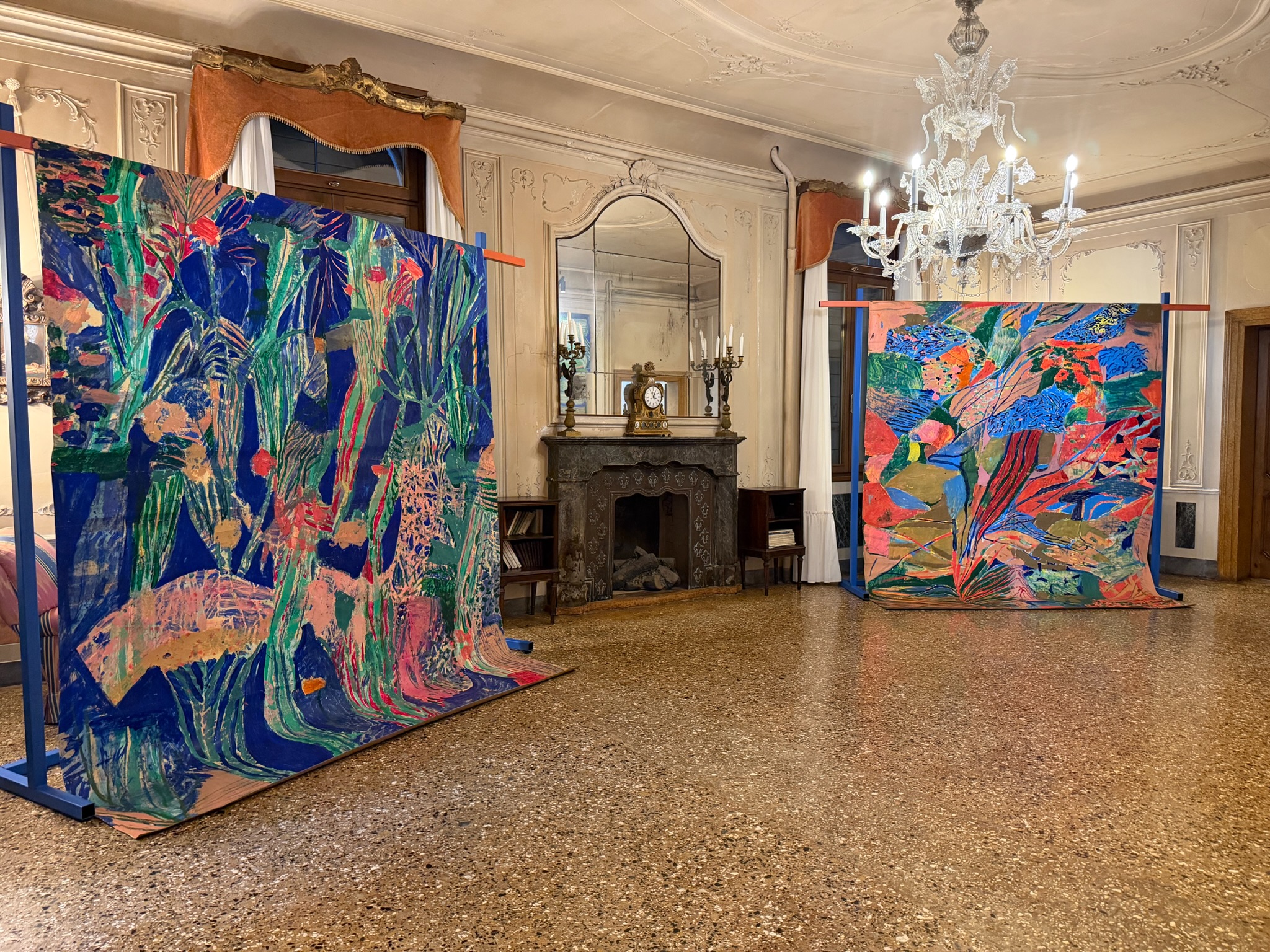
Geoffroy Pithon; L: Victoire, R: Sophie, 2026, 290 x 235cm, acrylic, silkscreen and oil stick on paper. Photo credit: Daria Borisova
ALLOCHORIES
Palazzo Nani Bernardo, Dorsoduro
Loris Cecchini
Until 27 May 2026
In ALLOCHORIES, Loris Cecchini situates his biomorphic sculptures in the gardens of Palazzo Nani Bernardo. Cecchini explores the biological concept of 'allochory' - the dispersal of seeds and organisms into new territories - through the juxtaposition of his steel modular structures that take root in verdant surroundings, simulataneously disrupting and harmonising with their environment.
The second show I co-curated - this time with Selcan Atilgan and Valentino Catricalà. Loris Cecchini's modular sculptures placed in the garden of Palazzo Nani Bernardo, behaving like seeds. Allochory is the biological term for dispersal into new territories by forces other than one's own - wind, water, accident. The works settle into the garden rather than dominate it. The garden stops being a backdrop and becomes a host. Every form is simultaneously rooted and displaced, belonging and strange. The threshold between nature and artifice turns out to be more porous than the garden's symmetry ever suggested.
Co-curated with Selcan Atilgan and Valentino Catricalà
Presented by ARTSA
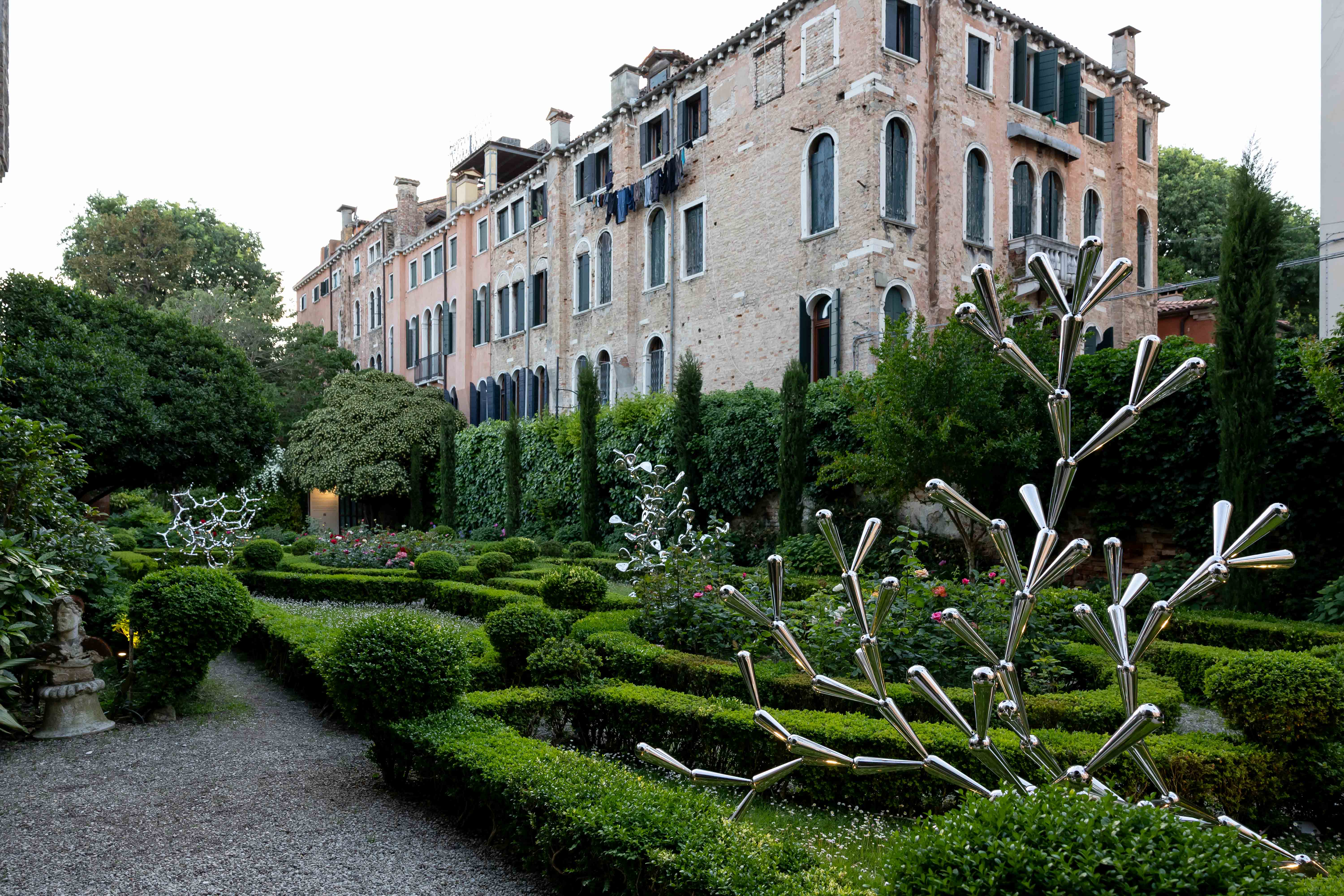
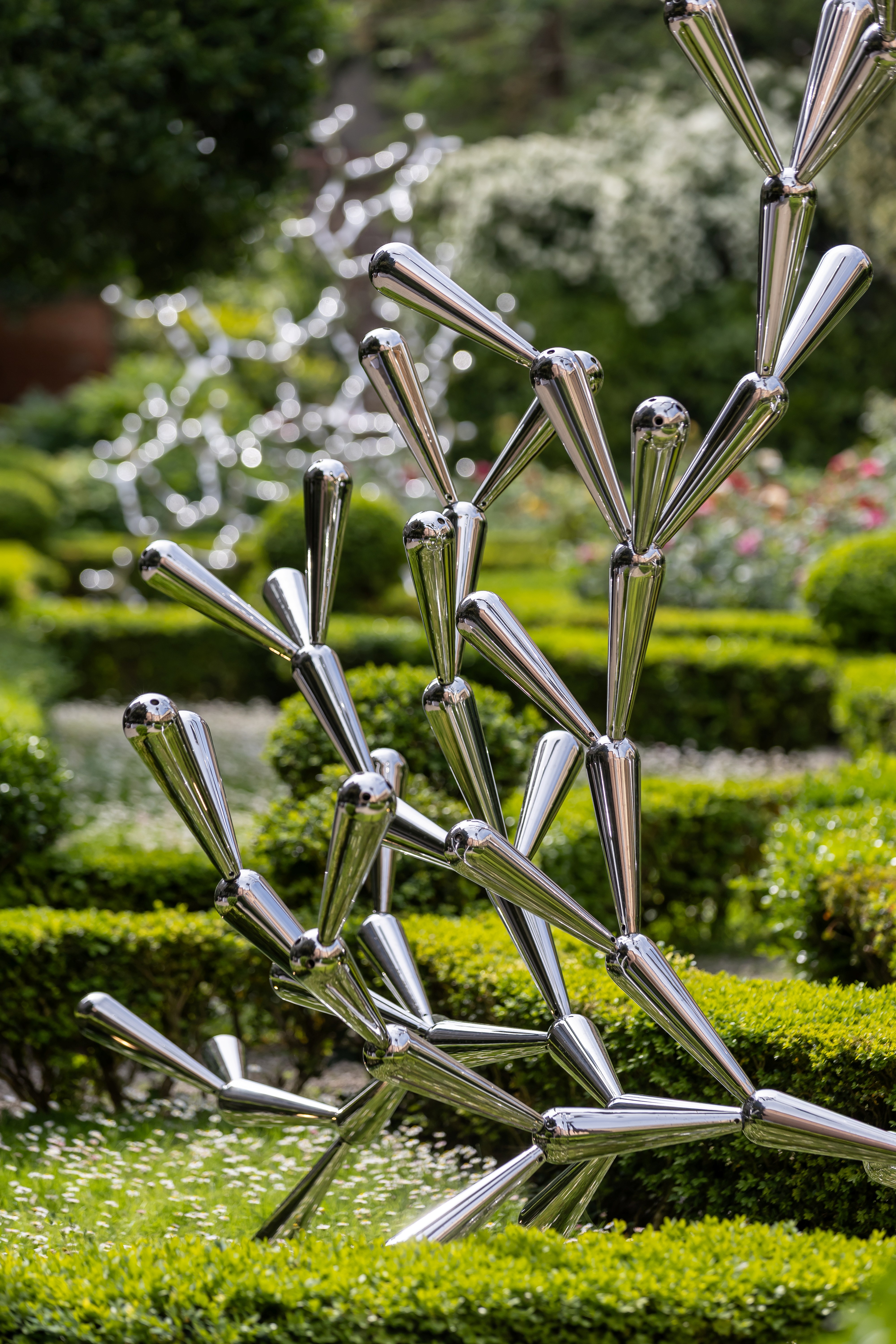
Loris Cecchini, Arborexence, 2022, dimensions variable, stainless steel modules. Photo credit: @whitesfilm
Sanya Kantarovsky: Basic Failure
Palazzo Loredan, Istituto Veneto di Scienze, Lettere ed Arti
6 May – 22 November 2026
Sanya Kantarovsky's exhibition at Palazzo Loredan encompasses site-specific works which converse his otherwordly paintings with historical architecture. Hypnotically transportive, Kantarovsky's work engages with mythical and religious imagery to create pieces which feel both familiar and alien.
Kantarovsky fills Palazzo Loredan with paintings, ceramics, and a sculpture made with a Murano glass studio - each one circling the same territory his practice has always inhabited: spirituality, alienation, the painted figure caught somewhere between vulnerability and myth. The exhibition text invokes Freud on taboo - that which is at once sacred and dangerous, unclean and consecrated, of unknown origin. It is a useful frame. These are works about the things we cannot quite touch, and the compulsive rituals we build around that impossibility.
The centaur appears as a recurring figure: half one thing, half another, the seam always visible, coherence strained at every joint. 'Basic Failure' names a specific kind of recognition - it's me, a star in this dark pool - followed, a second later, by nothing again. What Kantarovsky does well is hold shame and beauty in the same gesture. The paint itself becomes the taboo object: touched and retouched, restricted, completed in private time. Standing close to these works, you feel the painter circling something they cannot resolve - which is, of course, the only honest way to paint the things that matter.
Presented by Galerie Gisela Capitain
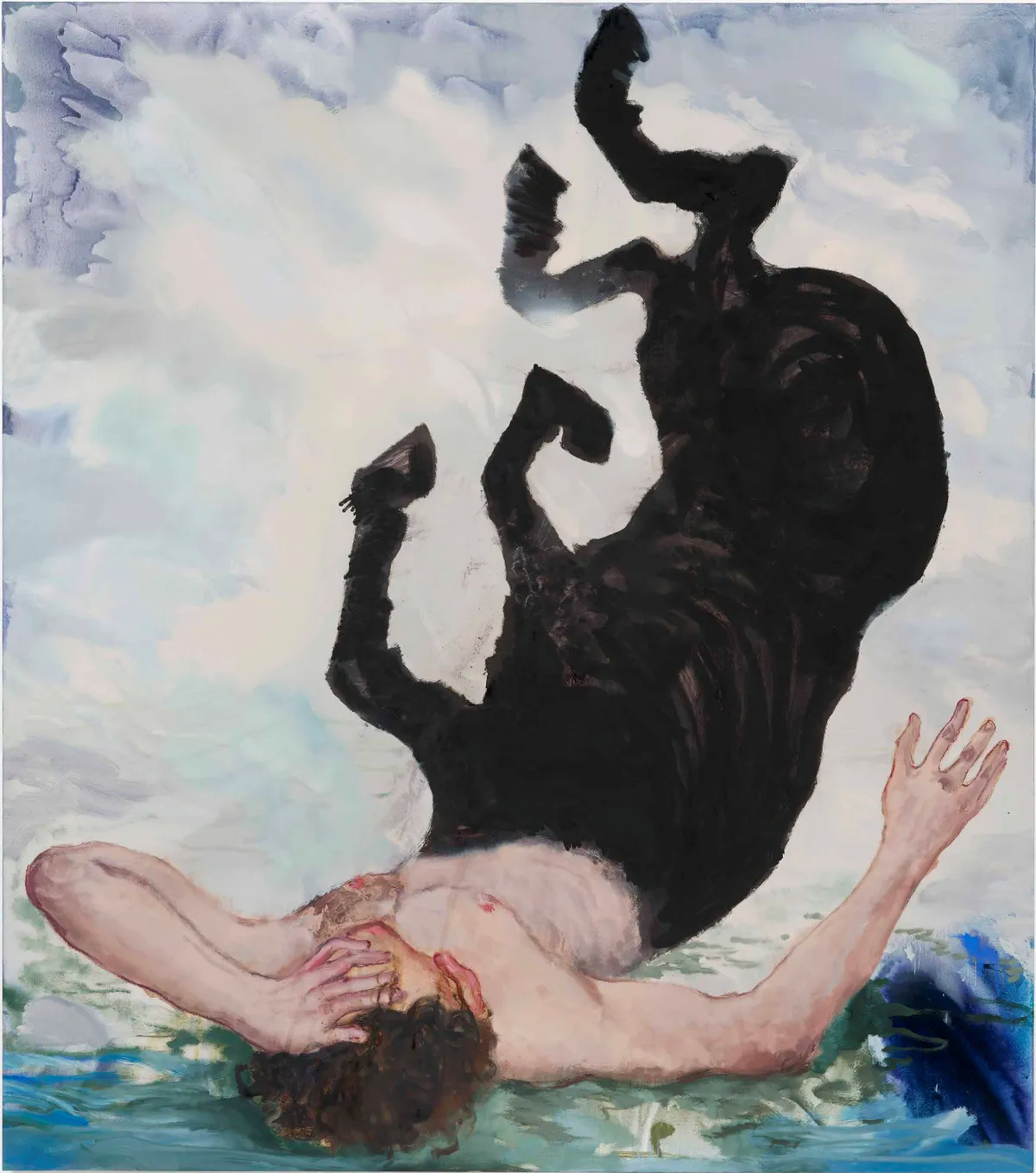
Sanya Kantarovsky, Death of a Centaur, 2026. Photo courtesy the artist, Gisela Capitain, Modern Art and VeneKlasen.
Matthew Wong: Interiors
Palazzo Tiepolo Passi, San Polo
6 May – 1 November 2026
Matthew Wong: Interiors brings together almost forty rarely seen works made from 2015 through to Wong's death in 2019. As the title indicates, 'Interiors' features paintings which depict private spaces, with these indoor scenes conveying a sense of psychological depth and introspection.
Matthew Wong died in 2019. He was thirty-five. The speed at which his reputation has grown since then is something the art world is still processing - and this exhibition, organised by the Matthew Wong Foundation alongside the opening of their new archive and study centre, feels less like a retrospective than a reckoning. Curator John Cheim, who mentored Wong early in his career, has gathered around thirty-five rarely seen and never-before-exhibited paintings and works on paper, all focused on a single theme: the interior. Physical rooms, yes - but also psychological ones.
Wong synthesised Matisse's colour, Munch's unease, Van Gogh's pressure, and made something that looks like none of them. Dense, non-naturalistic rooms that vibrate at a frequency slightly off from ordinary life. These are spaces that contain more than furniture. You feel the weight of someone having been inside them for a very long time. Palazzo Tiepolo Passi is the right kind of setting for this — layered, a little worn, its own history present in the walls. A scholarly catalogue with a text by Nancy Spector will accompany the show.
Curated by John Cheim
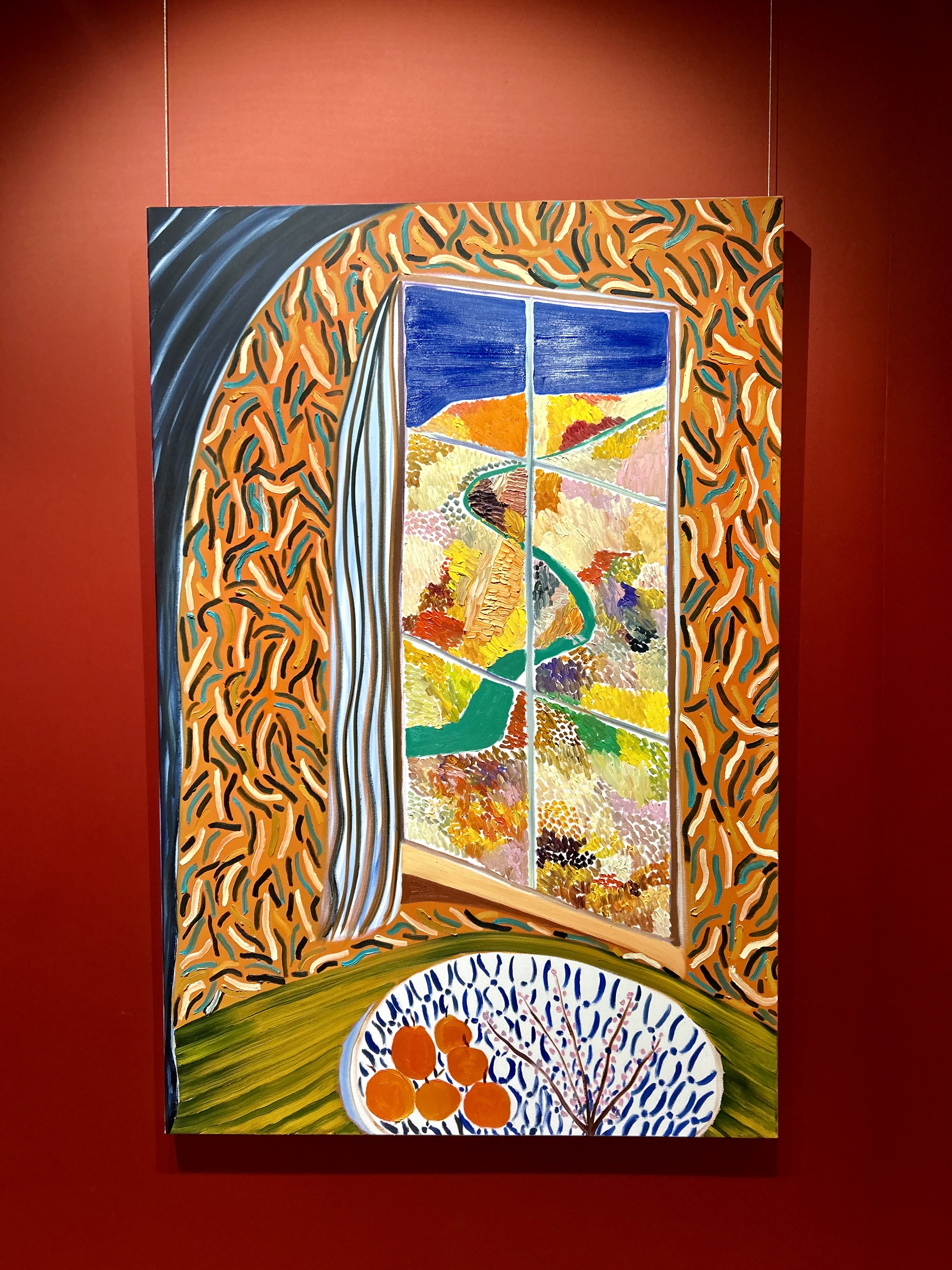
Matthew Wong, The Road, 2017, 183 x 122cm, oil on canvas. Photo credit: Daria Borisova.
Helter Skelter: Arthur Jafa and Richard Prince
Ca' Corner della Regina
9 May – 23 November 2026
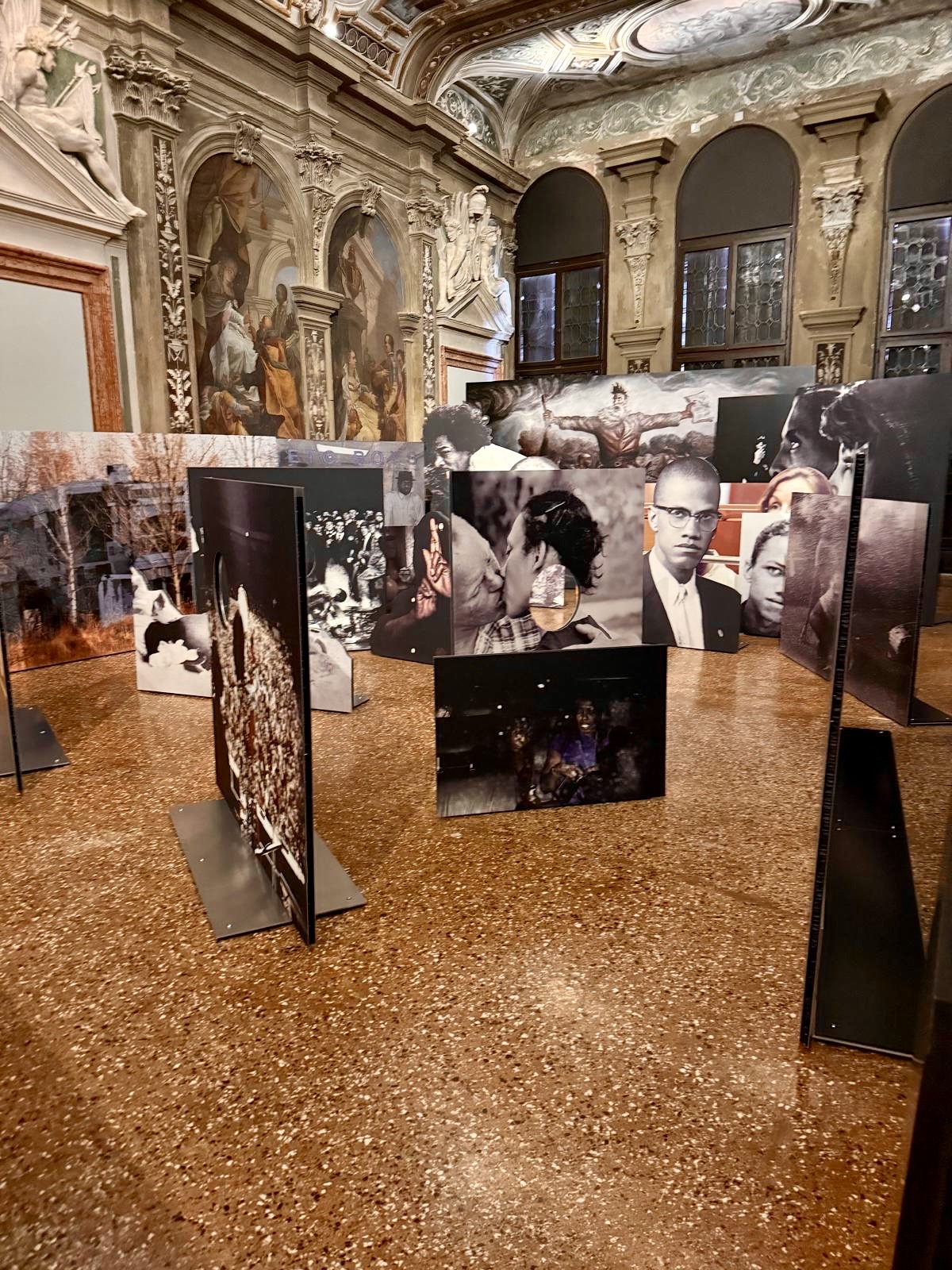
Helter Skelter: Arthur Jafa and Richard Prince is a compelling creative conversation between two American voices in over fifty works. Their shared approach of appropriating and manipulating images manifests in a dynamic presentation across the palazzo, with Jafa and Prince exposing the gritty underbelly of American popular culture.
I overheard someone call this the actual US pavilion. I don't need to explain why that landed. I completely agree. Curated by Nancy Spector, this is the kind of exhibition that only makes sense once you are inside it - and then makes complete sense. Jafa and Prince have never been shown together before, yet the conversation between them turns out to be one that has been happening for years. Both are image scavengers. Both work from the bottomless reservoir of American popular culture: movies, pulp fiction, album covers, social media, celebrity, news. Both owe something to Duchamp's piracy. And both, from very different positions, are making unflinching work about what America actually is. Jafa maps his practice from his identity as a Black man and a mission to transform what Black cinema and art can hold. Prince hovers between a critique of white masculinity and a deep fascination with its underbelly.
The distance between those two positions is exactly the tension the exhibition lives in. The title is already doing the work: a British fairground ride, a Beatles song, a Charles Manson prophecy, a 1992 LA show that excluded Black artists. All of it at once, unresolved. More than fifty works across the ground and first floor of the palazzo, including new pieces by each artist and a collaboratively made zine of images exchanged during the making of the show. Ca'Corner della Regina is one of the better venues in Venice for something this charged - grand enough to hold it, worn enough not to sanitise it.
Curated by Nancy Spector
.jpg)
Photo credit: Daria Borisova
Keep reading

Providing auctioneers, auction software, and auction management services for commercial and charity fundraising auctions since 2017. Copyright The Auction Collective 2026
.svg)

.png)
.png)
.png)


.svg)