Artist highlight

Artist highlight
Top 5 Artists | Fuen López
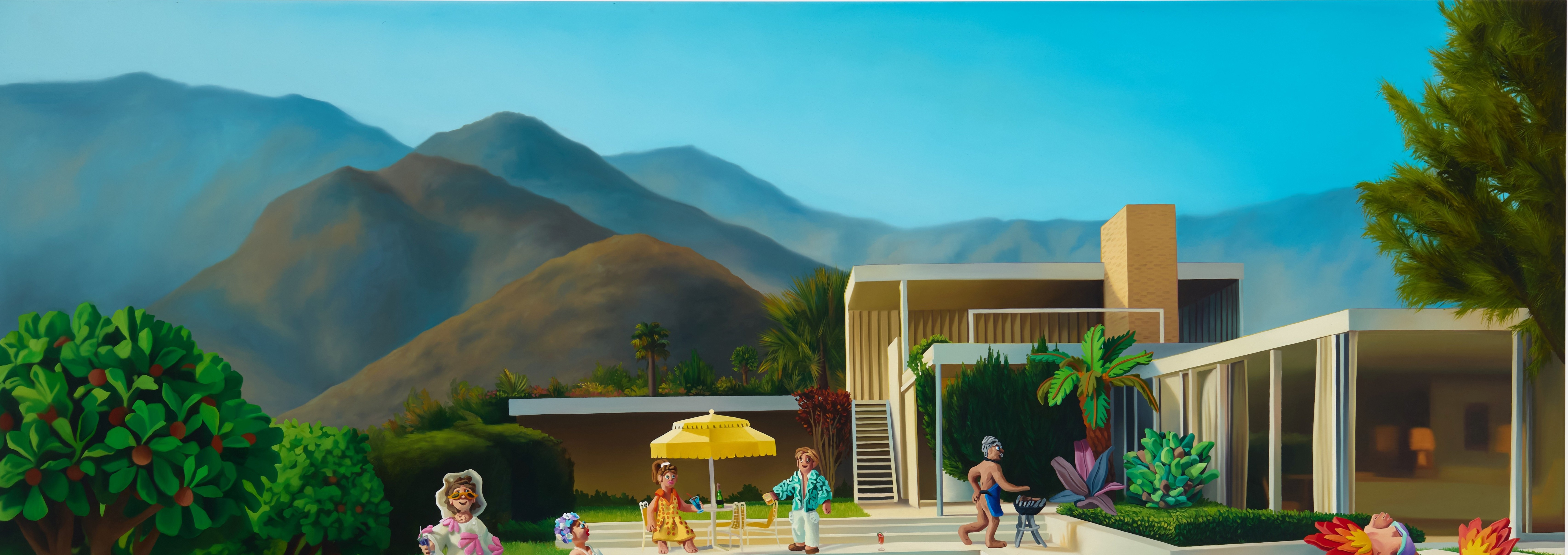
Natalia Ocerin, Palm Springs, 2025, Oil on linen, 115 x 170 cm, reinterpretation of Slim Aarons.
A spotlight on the Top 5 Artists to watch. This week's Top 5 comes from Fuen López, the Senior Patrons Manager at Tate, whose career spans fine art conservation, galleries, and artists' studios.
.png)
Image credit: Artepreneur
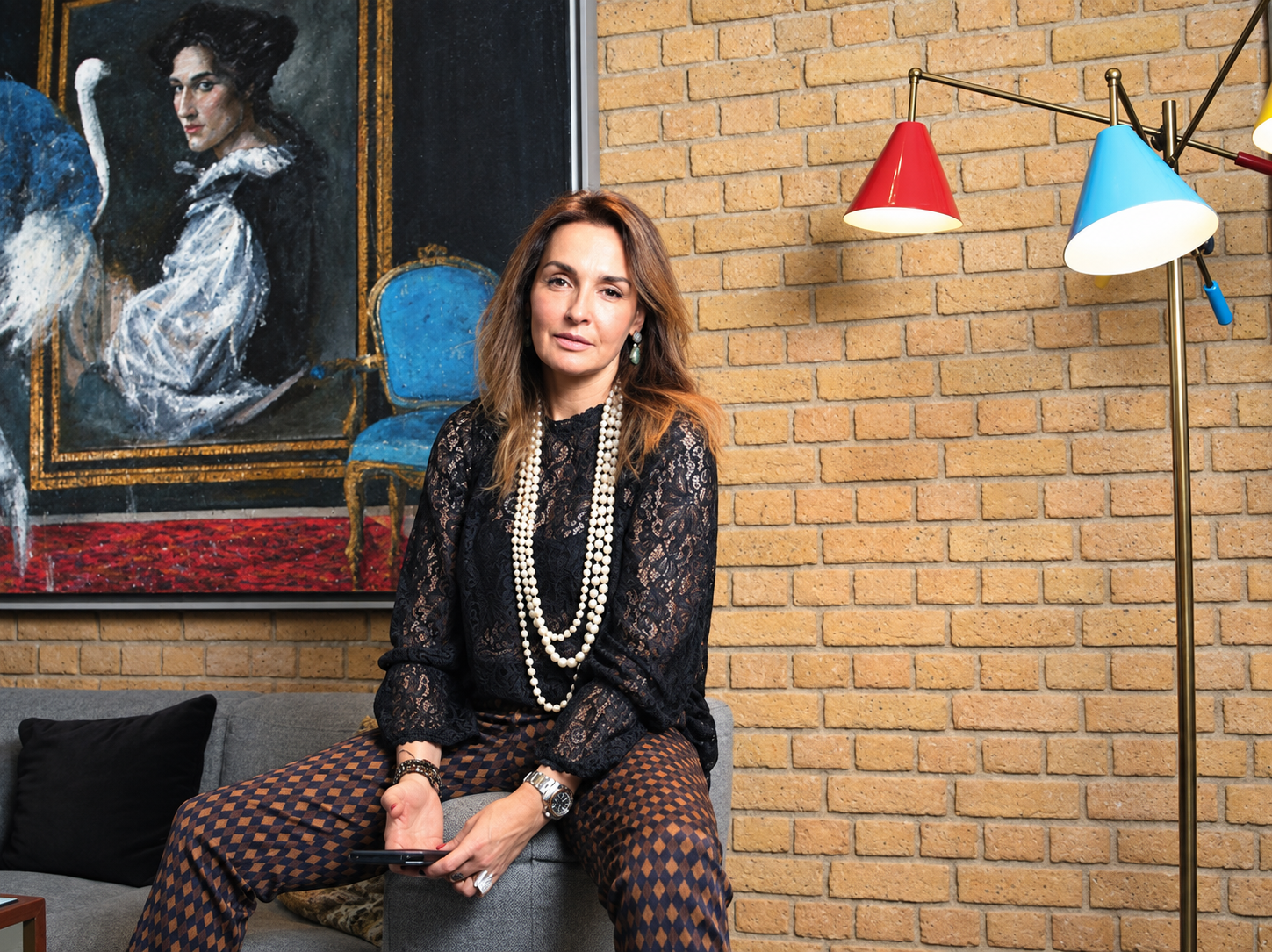
Fuen López
Fuensanta Soriano López (b. 1993) is a London based arts professional whose career spans fine art conservation, galleries, artists’ studios, museums and institutional philanthropy.
She began her career in Spain as a fine art conservator, specialising in Old Masters and Spanish Old Masters, with a particular focus on easel and panel painting, polychrome wood and altarpieces. This early training shaped her close attention to material history, condition, provenance and the life of objects beyond their surface image.
After moving to London in 2018, Fuen has worked across the commercial and institutional art worlds, developing a practice rooted in relationships, trust and thoughtful delivery. She has held roles at Louisa Guinness Gallery, where she worked across exhibitions, artist liaison, secondary market research, consignments, institutional loans, publications, digital strategy, sales and acquisitions.
She later joined Science UK Ltd, Damien Hirst’s studio, working in client liaison across collectors, institutions, exhibitions, loans and major stakeholder relationships. She currently holds the post of Senior Patrons Manager at Tate, supporting philanthropic giving and long term relationships that sustain Tate’s work across exhibitions, the collection, conservation, learning and public programmes.
Alongside her institutional work, Fuen completed an MA in Arts and Cultural Enterprise at Central Saint Martins, University of the Arts London, in 2024, further developing her interest in cultural strategy, audience engagement and the relationship between collections, institutions and public life.
She also volunteers with the London Spanish Film Festival and Fashion & Cinema Circles, providing advice and support. Her interests sit at the intersection of connoisseurship, the art market, collections and cultural stewardship. She is particularly drawn to artists whose work carries a strong sense of material intelligence, historical awareness, emotional charge and visual confidence.
Photo Credit: Fuen López
Hanna Wentz
“I have been following Hanna’s practice since she began her postgraduate studies at Central Saint Martins, and I have found it incredibly moving to watch the clarity and confidence of her visual language develop. What resonates with me is the way her work refuses to treat photography as something passive or transparent. Coming from a conservation background, I have always been interested in what lies beneath the surface of an image: its material behaviour, its fragility, its construction, its hidden histories. Hanna brings that same sensitivity into the digital realm. Her sensortypes feel like a poetic excavation of machine vision, revealing the invisible systems, errors and decisions that shape how images come into being. Her work is deeply research driven, and there is something both rigorous and beautiful in the way she turns technological instability into a form of visual truth. I am very excited to see how her practice continues to evolve.”
Hanna Claire Wentz (b. 1997, Minot, North Dakota) is an artist and researcher working with speculative photography to map the infrastructures of digital vision. She received her BA in Chemistry and Art History from Barnard College in 2019 and is currently completing an MA in Contemporary Photography at Central Saint Martins in London, graduating in July 2026.
Working across photography, material experimentation and critical theory, Wentz examines how sensors, software and machine vision shape the production of contemporary images. Through a self developed photographic technique called the sensortype, she pushes digital cameras beyond their intended operating conditions to reveal the hidden processes that structure visibility. Her work treats photographs as sites where light, code and material surfaces converge, expanding photography beyond representation into an investigation of how images are constructed, processed and experienced in the recursive era.
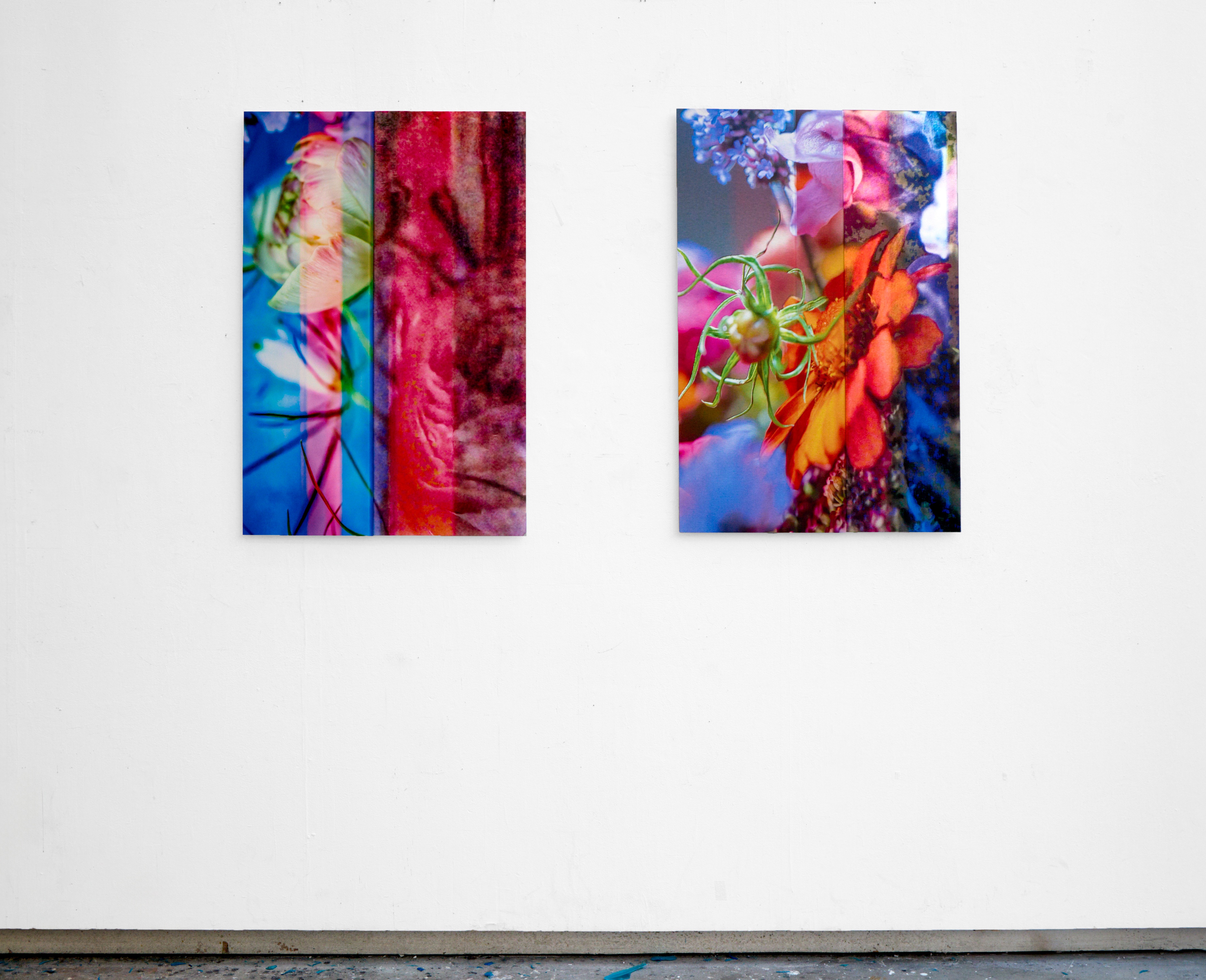
Installation shot (T to B): Untitled (Sensortype no. 6723) and Untitled (Sensortype no. 3319), 2025. Image courtesy of the artist.
Philip Steele
“I have enormous admiration for Philip’s practice, and I have been following very closely the work he has developed individually, as well as in dialogue with Moses Tan. What moves me most is the way his work gives form to things that are usually impossible to hold: grief, desire, memory, intimacy and loss. His fountains have a deeply affecting quality. Water becomes almost bodily, something that circulates, mourns, returns and refuses to stay still. There is a tenderness in them, but also a sense of ritual and haunting.
I am equally drawn to his heat reactive paintings, which feel alive in a very quiet and vulnerable way. They resist the idea of the artwork as something fixed. Instead, the image appears, shifts and recedes through temperature, proximity and time. For me, that instability is incredibly moving. Philip’s work understands love and loss as things that leave traces, even when they cannot be fully seen. There is something profoundly beautiful in the way he turns disappearance into presence.”
Philip Steele (b. 1996) is a Croatian, Irish and South African artist living and working in London. He is an interdisciplinary artist experimenting with heat reactive materials, sculpture, installation and painting. His practice explores queer necropolitics, examining the intersections of sex, death and grief.
Through his work, Steele investigates the mechanisms that shape representation, questioning how these forces operate within cultural and historical narratives. His engagement with themes of the hidden and the ephemeral reflects on the instability of love, loss and desire.
His most recent exhibition was held at R Gallery, Malta, in 2024 to 2025. He has exhibited in Argentina, across Europe and extensively in South Africa. His works are included in both public and private collections, including the Harvard University Library, Princeton University Library, the KwaZulu Natal Society of Arts, LagosPhoto20, Panal 361, Nel Gallery and the Pretoria Art Museum.
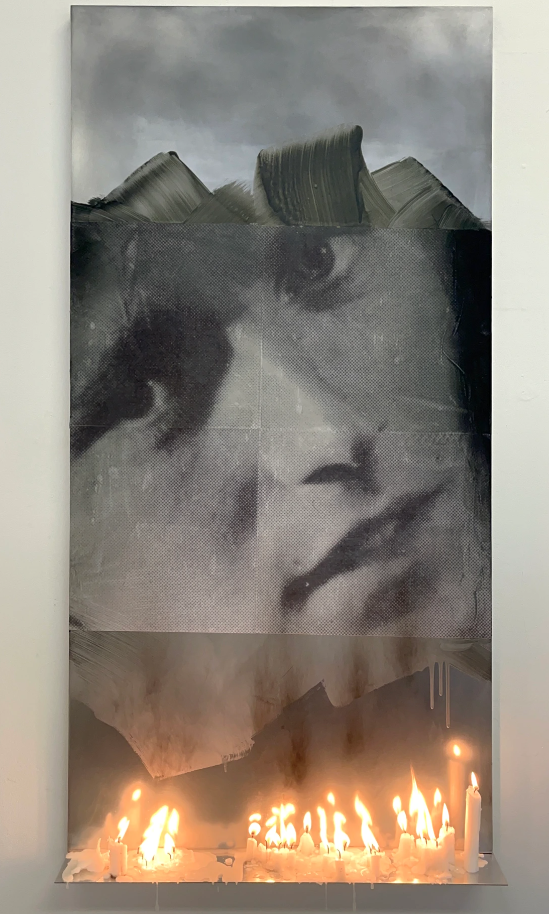
Philip Steele, Marching To The Beat Of Our Own Misery, 2025. Images courtesy of the artist.
Moses Tan
“I find Moses’ work quietly unforgettable. It has a way of drawing you in slowly, almost gently, before you realise how much is being held beneath the surface. What moves me is that the work does not feel the need to reveal everything at once. It trusts silence, fragments and suggestion.
Their installations often feel like entering a room where something has just happened, or is about to happen. Objects, images and gestures seem charged with feeling, but never over explained. I am drawn to the way Moses allows vulnerability and unease to sit together, and how fear, desire, memory and transformation can all become part of the same emotional landscape.
I also deeply admire the generosity of their wider practice. Moses is not only building a language through their own work, but also creating space for others through s t a r c h. That combination of sensitivity, intelligence and care feels very rare.”
Moses Tan (he/she/they) is an artist, curator and enabler from Singapore, currently based in the UK. Their practice explores queer theory, melancholia, ecology and, more recently, horror. Through allegory and codedness, Tan considers modes of poetic resistance, using open ended forms guided by autotheory as alternative bodies of lived and embodied knowledge.
Working across drawing, sculpture, video, found objects and essayistic installation, Tan creates spaces of speculation that examine the relationship between memory, opacity, desire and resistance. Their study at Goldsmiths, University of London is supported by the National Arts Council, Singapore Postgraduate Scholarship.
Tan has shown in various spaces including Kadist San Francisco, Singapore Art Museum and 4A Centre for Contemporary Asian Art, and has completed residencies at Santa Fe Art Institute and Perth Institute of Contemporary Arts. Their works are held in private and institutional collections including Kadist Foundation, Singapore Art Museum and the Museum of Contemporary Art, Bangkok. They have also shown at art fairs including Photo London 2026, Untitled Art Miami Beach 2025, Asia Now Paris 2025 and ART SG.
Alongside their artistic practice, Tan founded the artist run independent space s t a r c h in 2021, supporting artistic and curatorial experimentation through exhibitions, residencies and performances. The space has been featured in Time Out Asia, Financial Times UK, F Zine SG and Monocle.
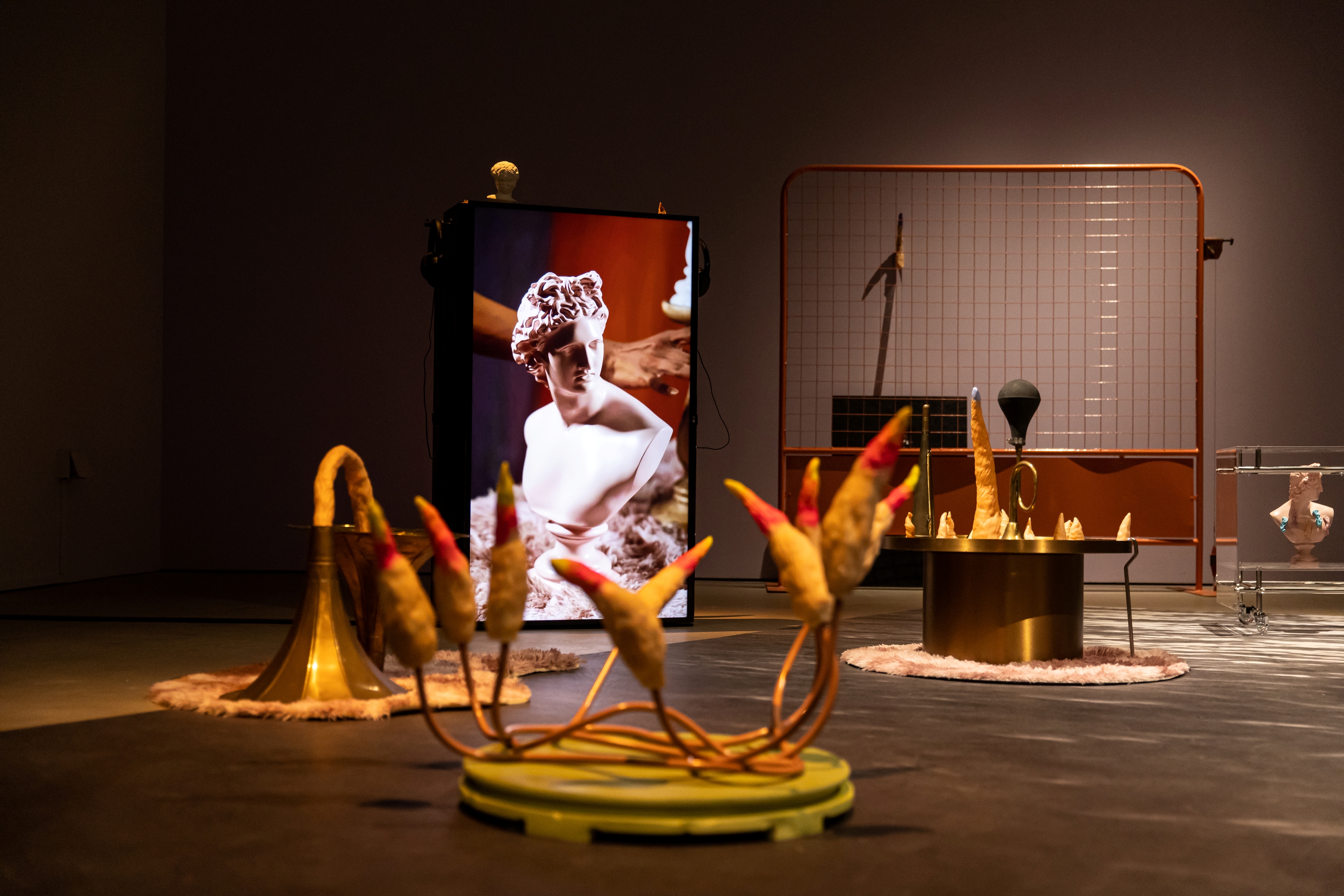
Moses Tan, 'a caveat, a score', Part of SAM Contemporaries, 2023, at Singapore Art Museum. Image courtesy of Singapore Art Museum.
Natalia Ocerin
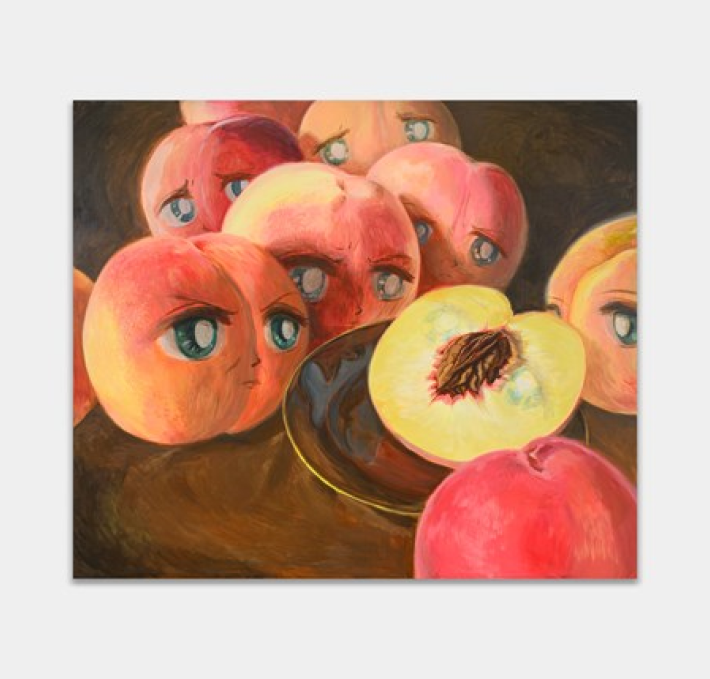
“Natalia is a friend, and I have had the privilege of following her practice closely for years. What I find extraordinary about her work is that it can disarm you at first. There is something immediately seductive in the plasticine, in the characters, in the colour, in the theatricality of it all. But the longer you spend with her paintings, the more you realise how intellectually sharp and deeply constructed they are.
Her process is incredibly demanding. She does not simply imagine an image and paint it. She builds it first, by hand, in plasticine, almost like a private stage set, and then translates that temporary, fragile world into hyperrealist oil painting. That double act matters. It gives the work its strange tension between play and discipline, satire and beauty, softness and precision.
What I admire most is Natalia’s ability to make work that is generous on the surface and rigorous underneath. There is humour, criticism, art historical intelligence and a real literary depth to what she does. Her current Dante series feels like a particularly exquisite moment in her practice. Every time I look at one of her works, I notice something I had missed before: a gesture, a reference, a small cruelty, a joke, a warning. She is a complete artist, and her technical ability is matched by an extraordinary imagination.”
Natalia Ocerin (b. 1989, Valencia, Spain) is a Spanish artist based in London. Her practice spans hyperrealist oil painting, plasticine scenography and glazed ceramics, constructing a language in which the ephemeral and the permanent, the handmade and the monumental, coexist in deliberate tension.
Her methodology begins with hand built plasticine scenographies, three dimensional rehearsal spaces for thought, which are then photographed and transferred to large scale canvas. The coexistence of both material states in the exhibition space forms an essential part of the work’s ethical proposition.
Ocerin is currently developing Dante. The Inferno, a major body of work comprising twelve large scale oil paintings that trace the nine circles of Hell, reimagined not as literary illustration but as a mirror of contemporary human behavior. Conceived as a sequential, immersive installation, the project resists moralizing narrative in favor of recognition, inviting the viewer to locate themselves within each circle rather than observe it from a distance. As with the rest of her practice, each painting originates from a hand sculpted plasticine scenography, positioning the series as both a continuation and an intensification of her core methodology.
Ocerin holds an MA from Central Saint Martins, UAL, London, and a Master in Artistic Production from the Polytechnic University of Valencia. Her work has been shown at Untitled Art Fair Miami, The Armory Show New York, and in solo and group exhibitions in London, Miami, Berlin and Spain. Recent press includes The New York Times and Whitehot Magazine of Contemporary Art.
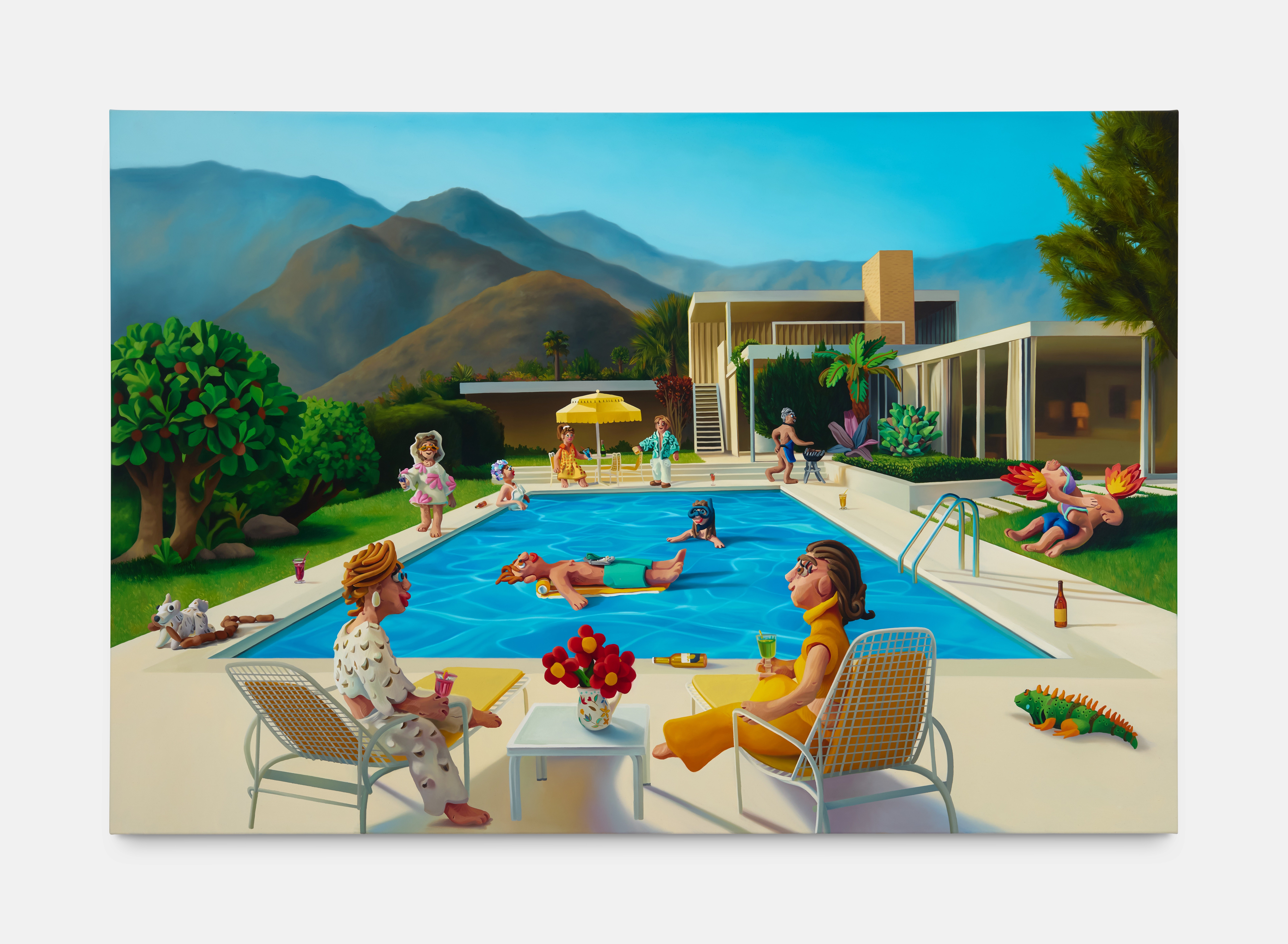
Natalia Ocerin, Palm Springs, 2025, Oil on linen, 115 x 170 cm, reinterpretation of Slim Aarons. Image courtesy of the artist.
Alison Dollery
“Alison is one of those artists whose work stays with you immediately. I first met her at the Royal College of Art graduate show, and the connection was instant. Her practice felt so specific, articulate and unlike anything else I had seen that day: an artist using her own body not simply as subject matter, but as material, evidence, language and site of reclamation.
What I find so powerful in Alison’s work is the way vulnerability becomes a position of authorship rather than exposure. There is bravery in the openness with which she presents her body through photography and performance, but there is also immense control, intelligence and precision. She is not simply showing the body; she is questioning who gets to look at it, who gets to define it, and how an artist can reclaim their own image through practice.
Her work speaks about transformation, stigma, visibility and self-representation with a rare combination of directness and rigour. It is deeply personal, but never closed in on itself. Instead, it opens onto much wider questions around how bodies are read, medicalised, altered, judged and remembered. Alison is an extraordinary artist, and also an extraordinarily articulate one. Meeting her felt like discovering a practice with real urgency, courage and depth.”
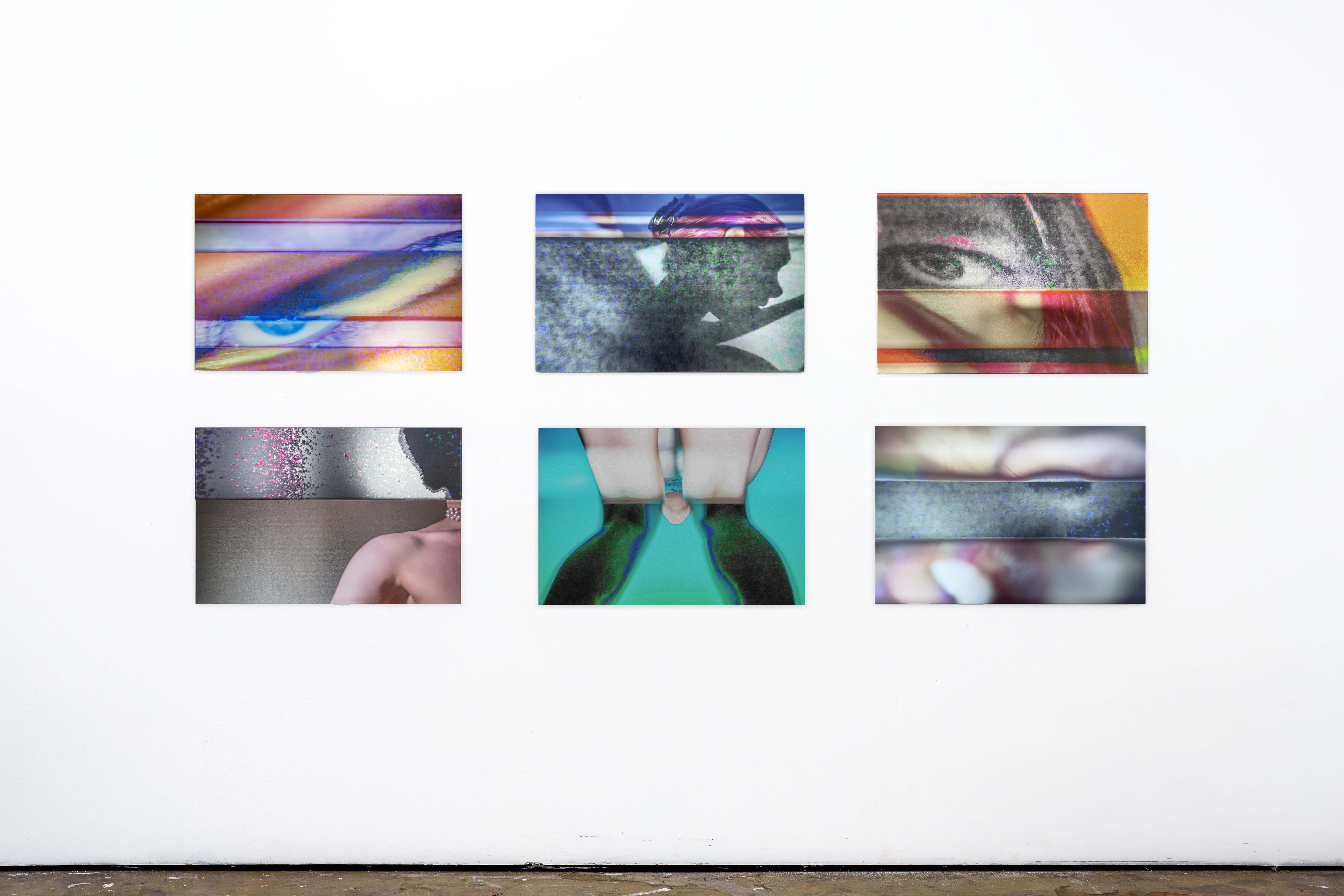
Alison Dollery is a visual artist, writer, researcher and curator whose interdisciplinary practice explores the body as a site of material, political and embodied knowledge. Working across photography, drawing, painting, sculpture, printmaking, performance, body art and writing, Dollery develops an expanded language of self-representation in which the artist’s own body becomes both medium and canvas.
Central to Dollery’s practice is the concept of the “Manufactured Body”, a term through which she examines lived experience, long-term health conditions, bodily stigma, drastic weight loss and physical transformation. Rather than approaching the body as a fixed or passive subject, her work positions it as an active site of authorship, agency and resistance.
Through her use of performance, image-making and research, Dollery asserts ownership over embodied experiences that are often socially scrutinised, medicalised or made invisible. Her practice investigates the politics of looking, the construction of bodily identity and the relationship between personal transformation and public perception.
Dollery holds an MFA in Art and Humanities from the Royal College of Art and a First-Class BA (Hons) in Fine Art from UCA. She is currently undertaking an AHRC-supported PhD with the University of Southampton. She has exhibited internationally, with artist talks including at the Royal Academy of Arts, London.
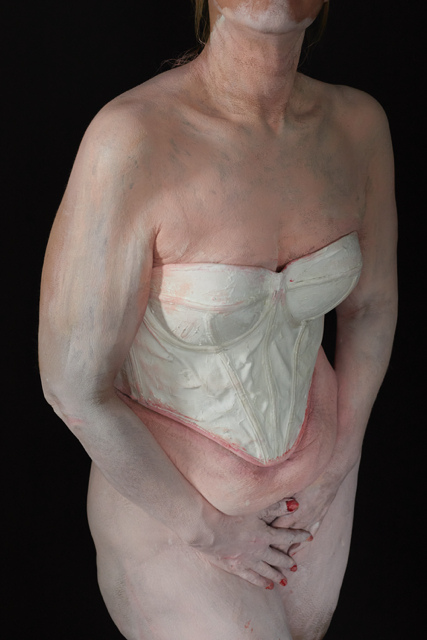
Alison Dollery, Manufactured Body Aesthetics, 2024. Images courtesy of the artist.
Keep reading

Providing auctioneers, auction software, and auction management services for commercial and charity fundraising auctions since 2017. Copyright The Auction Collective 2026
.svg)


.png)


.svg)