Artist highlight

Artist highlight
Top 5 Frieze Week Highlights | Ryan Lanji
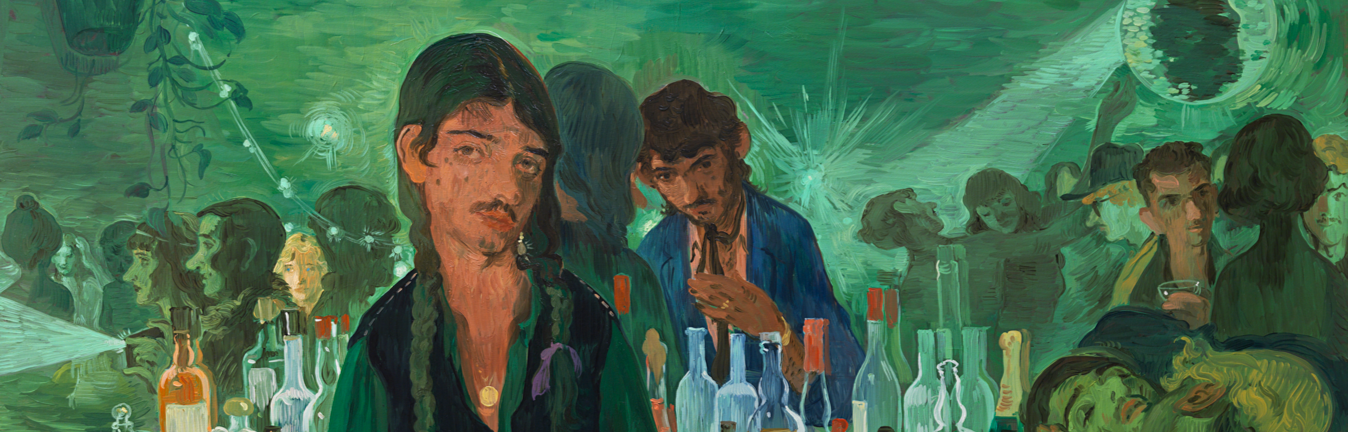
Salman Toor, The Bar on East 13th, 2019, oil on panel, 91.4 x 121.9 cm. Image © Salman Toor, Luhring Augustine, Thomas Dane.
In anticipation of Frieze Week, Ryan Lanji writes exclusively for The Auction Collective to create a special Top 5 editorial of his must-see booths, exhibitions, and events you can’t miss.

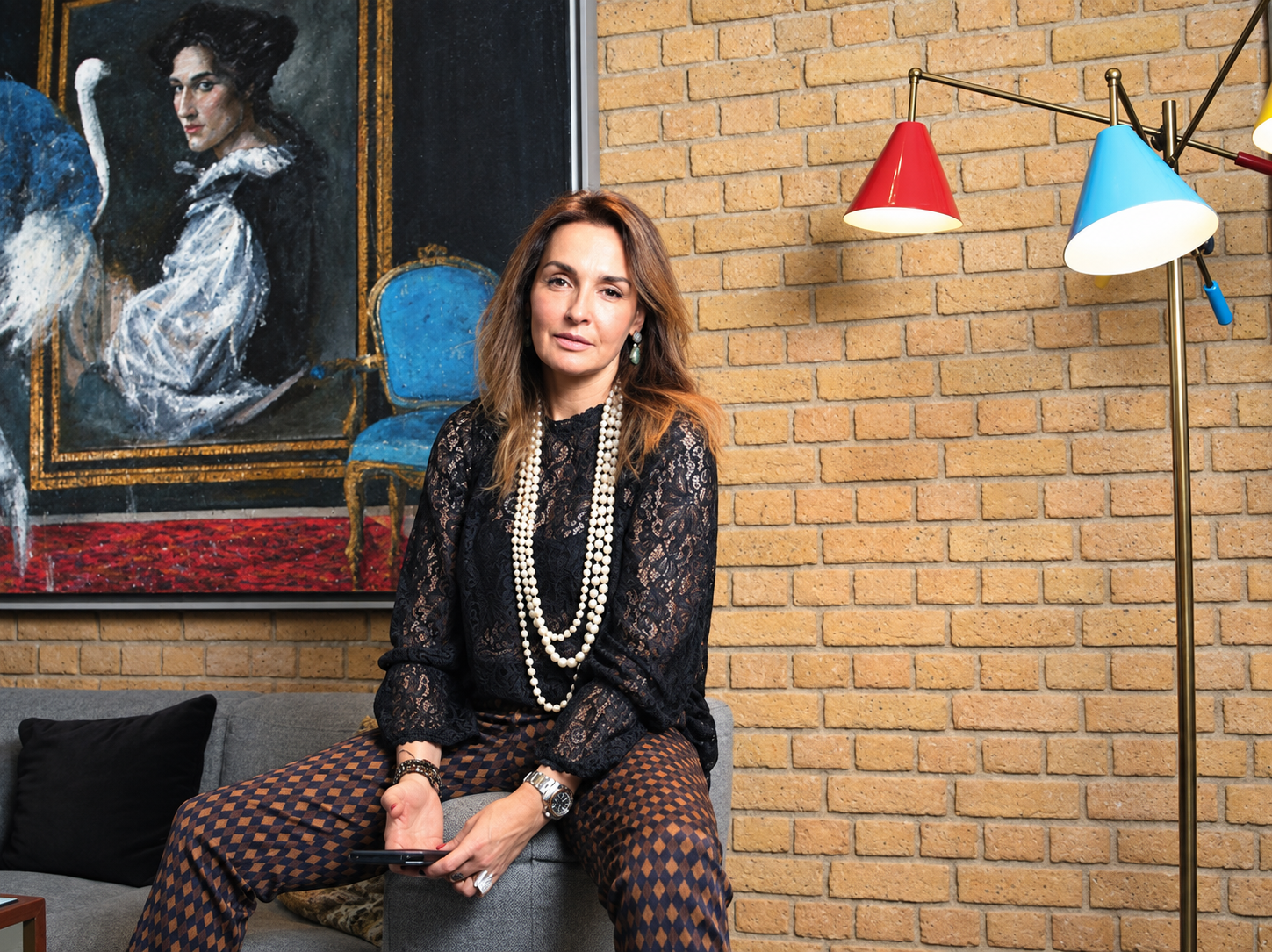
Image courtesy of Ryan Lanji and India Bharadwaj
Ryan Lanji
Ryan Lanji is a London based cultural curator, creative director, and presenter. He won the 2020 reality competition The Big Flower Fight and hosted the BBC series The Big Proud Party Agency. He describes himself as “an artist whose medium is people. Some people love my work, some people take issue with it, but heck, at least my name is on their lips and my events become cultural moments.”
His practice is built around that idea. Bringing unlikely people, disciplines and subcultures into the same room and seeing what happens next. Art, fashion, nightlife and community are simply different materials to work with. He is the founder of HUNGAMA, the queer Bollywood night turned global movement, and co-founder of First Wednesdays, a monthly cultural ritual inviting Londoners to wander through Soho and Fitzrovia’s galleries on the first Wednesday of every month. You can usually find him there between 6 and 8pm, leading people between exhibitions, introducing strangers to one another and occasionally losing half the group en route, before ending at the Light House Soho, Joe Corré’s wonderfully eccentric Berwick Street creative space. His practice is part curator, part host, part cultural anthropology. He is as interested in the ecosystem surrounding an artwork as the object itself. Who made it, who turned up, what they wore, who they avoided and where everybody went afterwards.
He believes in making people laugh through a little Warholian observation. His natural habitat is somewhere between the gallery, the front row, the dancefloor and, some would say, the gym. For Ryan, culture has never existed in neat categories. The people looking at the art are frequently as interesting as the art itself.
At Frieze
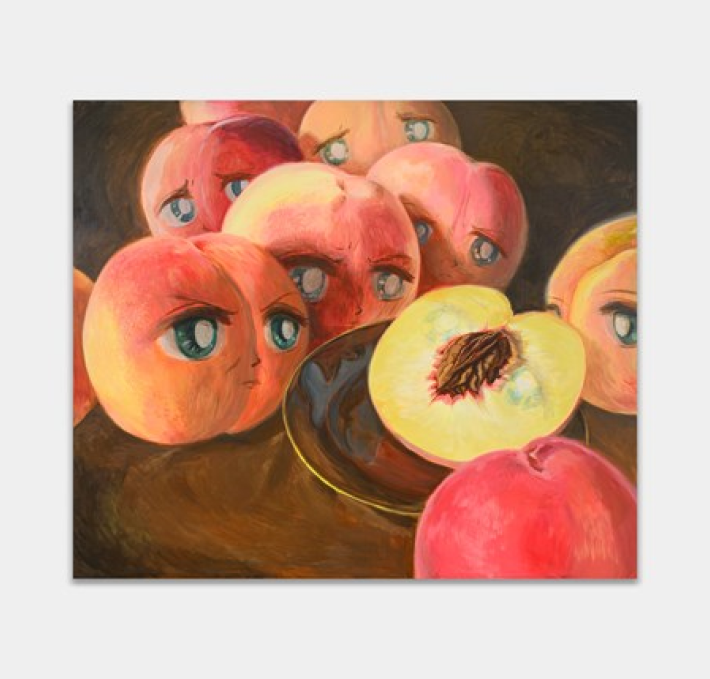
I’m an Oli Epp fan through and through. If Duchamp had Dalí, Lanji has Epp. Oli and I have watched each other grow and thrive. It warms my heart to think about seeing his works hanging in his own bedroom in East London, then watching that world expand into solo shows in Shanghai and New York, and now looking forward to the unveiling of Hand Holders with Perrotin at Frieze London.
Hand Holders is unmistakably Oli. Polished, absurd, funny, anxious, seductive, slightly synthetic and queer. He has this ability to make you smile at something and then leave you wondering why it made you uncomfortable. But beyond the work, his friendship means a great deal to me.
When I was a young curator pondering his legacy, I dreamt about having relationships with artists that would grow alongside the work. Not transactional art world relationships, but friendships where you get to witness each other becoming who you were trying to be. My friendship with Oli is exactly what young curator Ryan dreamed the art world could be. Seeing Hand Holders at Frieze feels like watching your friend’s dreams, and in a small way some of your own, hanging on the wall.
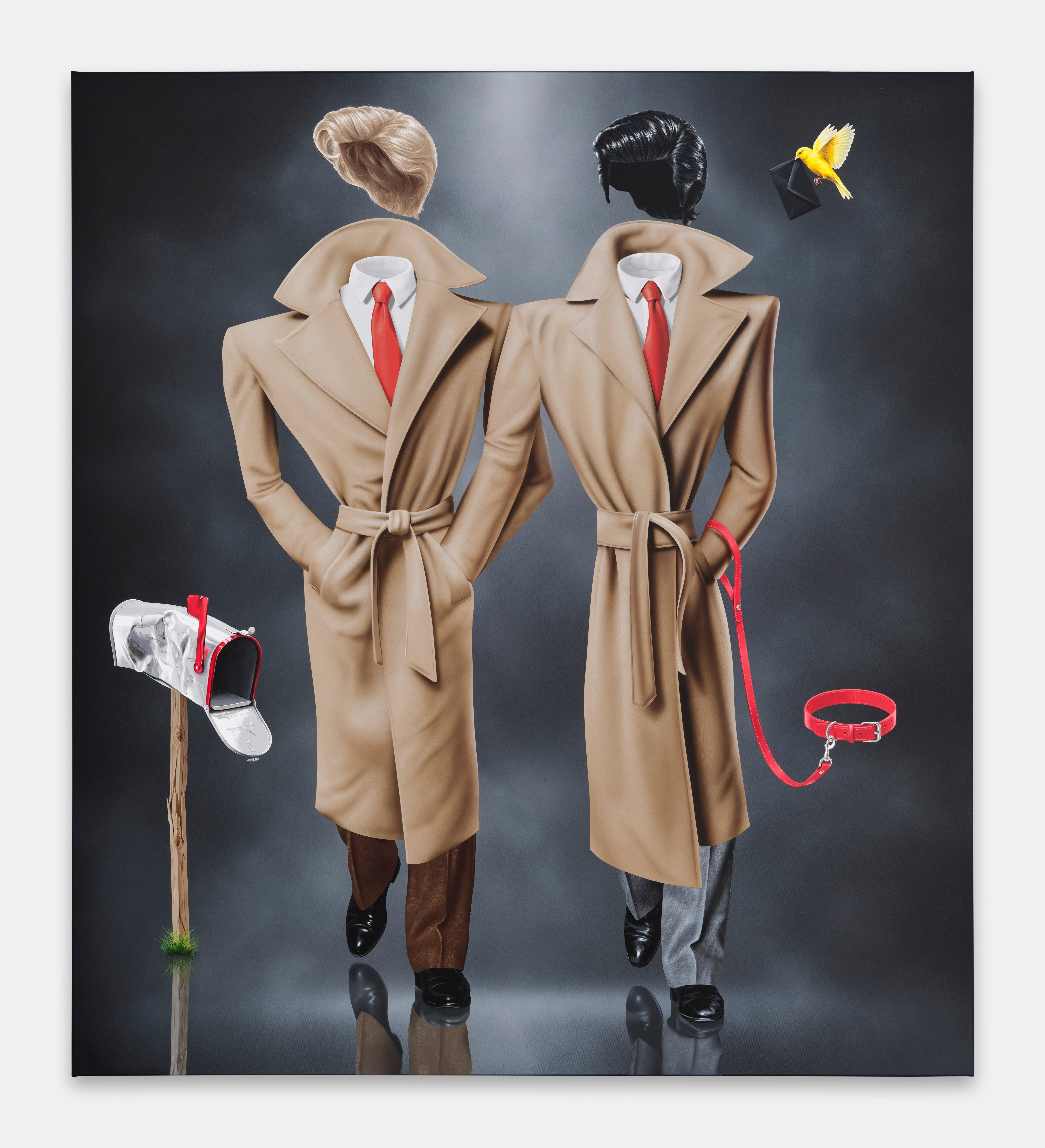
White Cube is firmly on my Frieze route this year, particularly for Ilana Savdie, a queer artist raised in Barranquilla, Colombia, now living and working in Brooklyn. Her paintings are acidic, excessive and bodily, combining acrylic, oil and beeswax in these strange, seductive surfaces that explore identity, power and transformation. Naturally, I’m into it. There’s also a very personal reason White Cube is always on my radar. Alex O’Neill, now a juggernaut at the gallery, was one of the first people I met when I moved to East London.
She’ll probably hate me for publicising this story, but I was working at a pizza place, my first gig in London, had basically no friends and was completely in awe of her style. So I did the most Ryan thing possible and simply asked if she would be my friend. Turns out she had just landed a junior PR placement at Tate. We hung out on Brick Lane in 2010 and I’ve watched her become the powerhouse she is today without ever losing her kindness or sense of self.
There’s something very special about growing up in a city alongside people like that, which brings me back to Savdie. She draws heavily from Barranquilla’s Carnaval and its ability to temporarily disrupt the rules. Bodies exaggerate, characters mutate, identities shift and mockery itself can become protest. That feels inherently queer to me. At Frieze, her work sits in conversation with generations of artists who have similarly distorted and reimagined the body, including Louise Bourgeois, Salvador Dalí, Marlene Dumas, Willem de Kooning and Egon Schiele. It creates this strange family tree of artists who have refused to leave the human body alone. Queerness, carnival, acid colour, spectacle and bodies refusing to behave.
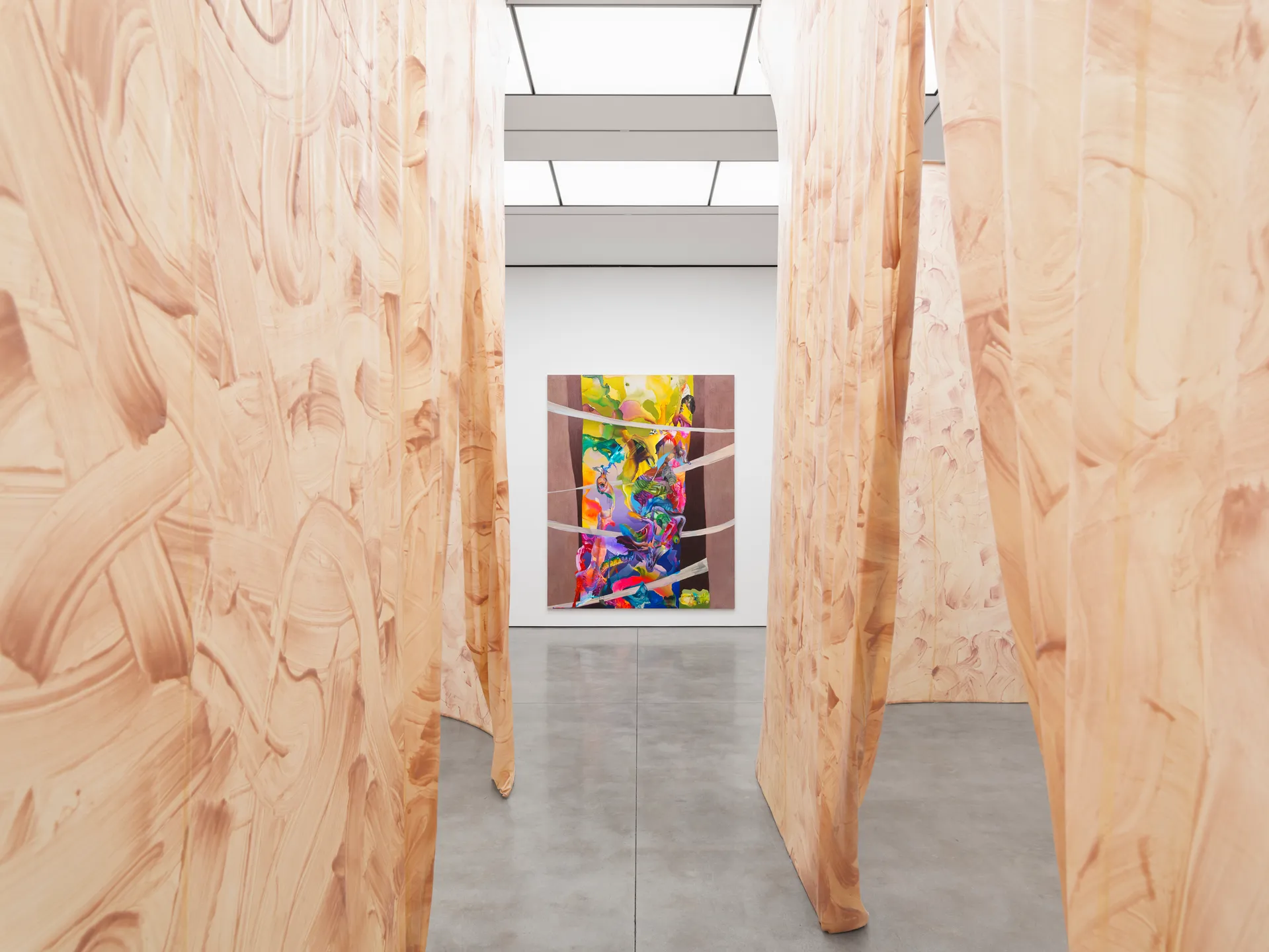
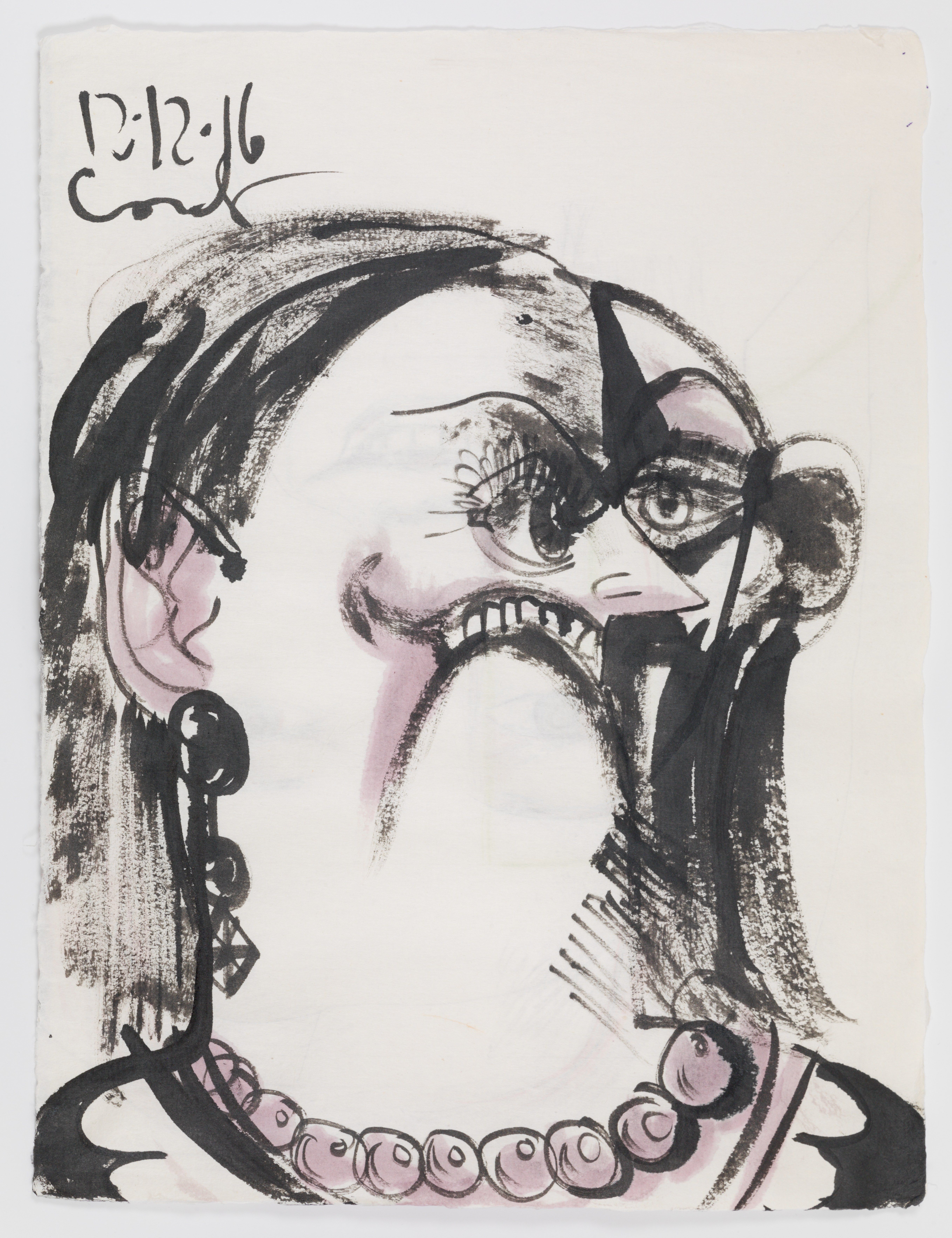
Carl Freedman Gallery is absolutely on my Frieze route this year, and there’s a personal history here too. Almost a decade ago, I was working reception at an incredible little boutique gym in Shoreditch run by the iconic Margaret Pope. “Receptionist” is generous. I was essentially a glorified towel boy, but I loved that place. Stella McCartney, Tracey Emin, Erdem, Carl Freedman and Robert Diament all passed through. This was Robert before Talk Art. Me before HUNGAMA. Man, that was when Shoreditch was cool.
So there’s something beautifully full circle about seeing Carl Freedman Gallery at Frieze now, particularly with a presentation bringing together Emii Alrai, Billy Childish, Laura Footes, Olivia Guillot, Joline Kwakkenbos, Lindsey Mendick, Vanessa Raw, IyunOla Sanyaolu, Benjamin Senior, Lola Stong Brett and Studio Lenca. It’s a grouping that moves through identity, the body, memory, material and different ways of telling personal and cultural histories. Studio Lenca is particularly on my radar. Alongside the gallery presentation, he’s Deutsche Bank’s 2026 Lounge Artist across both Frieze London and Frieze Masters.
His work explores migration, belonging and identity through his own experience and Central American heritage. There’s something brilliant about that work occupying the corporate architecture of an international art fair. Migration, memory and belonging sitting inside a space associated with capital, collecting and power. That tension is exactly what I want art to create.
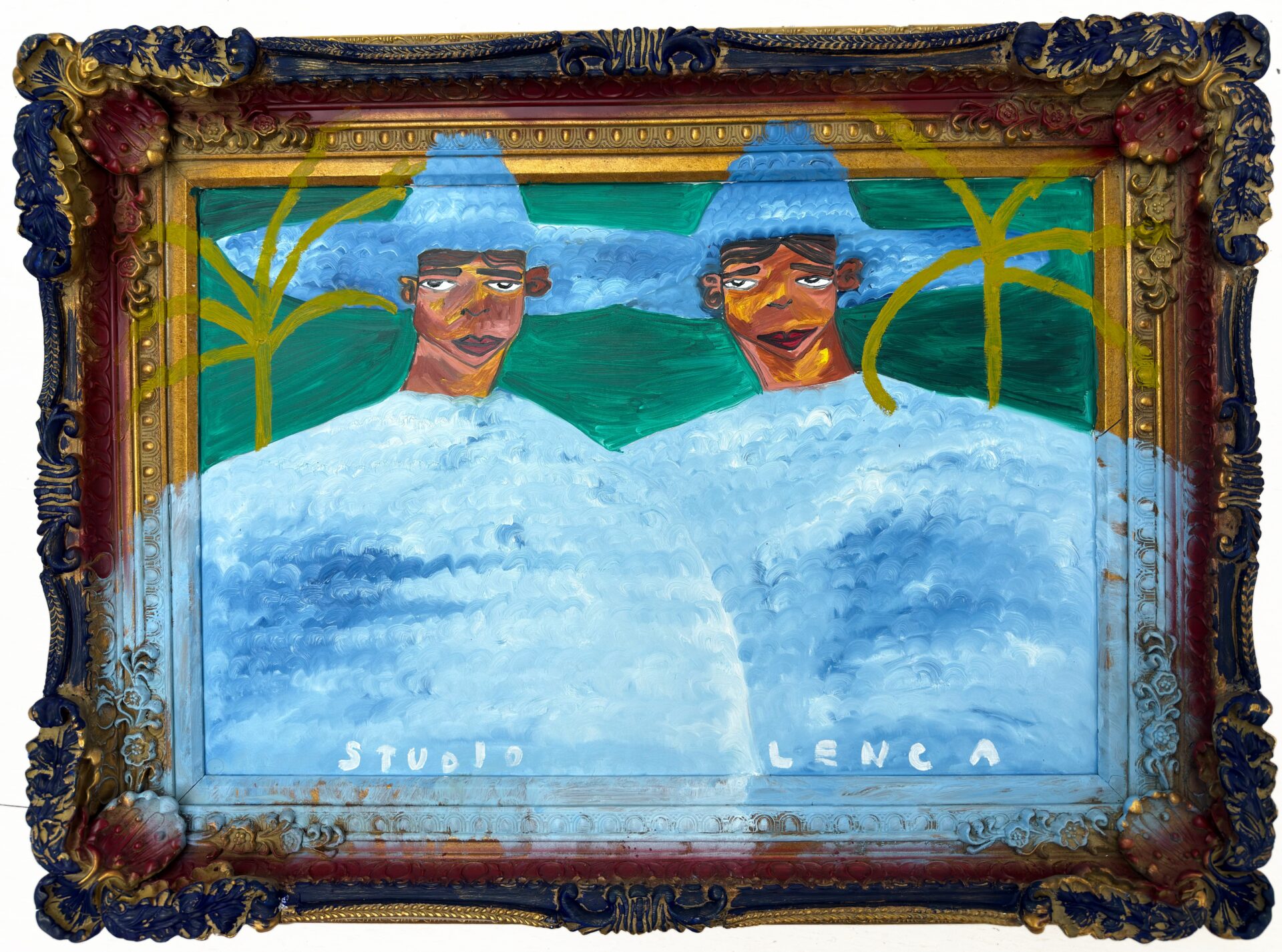
Studio Lenca, Lago, 2026, oil & acrylic on board with antique frame, 89 x 120cm. Image © Carl Freedman Gallery.
Salman Toor, Someone Like You at The Courtauld
Salman Toor’s work fascinated me. It was tender, strange and at times incredibly funny, but what stayed with me was seeing the world painted through the eyes of a queer Pakistani immigrant from Lahore to New York. As a queer South Asian, it struck cultural chords in me that I didn’t realise had been silent for so long. Museum Boys made me smile, but it was the women who made me pause. There was something in the gestures, the familiarity and the way they occupied the paintings that hit me with this unexpected wave of nostalgia.
I recognised something before I could quite explain what I was recognising.
That’s what I loved about Toor’s work. Queerness and South Asian identity aren’t presented as opposing forces or translated for somebody else. They simply coexist. There’s humour, longing, glamour, awkwardness, family and desire, sometimes all within the same painting. Walking through The Courtauld, I realised I wasn’t just looking at his memories. Somehow, they were waking up some of mine.

Salman Toor, The Bar on East 13th, 2019, oil on panel, 91.4 x 121.9 cm. Image © Salman Toor, Luhring Augustine, Thomas Dane.
The 90s: Art and Fashion at Tate Britain
Fashion is art to me. Full stop. I’ve never understood why we insist on separating the two. Clothes can tell you as much about class, race, sexuality, rebellion, politics and beauty as anything hanging on a gallery wall. That’s why The 90s: Art and Fashion at Tate Britain feels essential to me. Curated by Edward Enninful, it brings together the works and stories of an incredible decade when the relationship between art and fashion felt genuinely radical.
The 90s gave us a generation of image makers, artists and designers who weren’t simply referencing politics as an aesthetic. The moves being made in fashion were truly political, not performative. Who was being photographed, who was allowed into the room, whose bodies were celebrated and what was considered beautiful were all being challenged. And I trust that story in Enninful’s hands. He didn’t study that world retrospectively. He helped shape its visual language. McQueen, Westwood, Tracey Emin, Chris Ofili, Juergen Teller, Corinne Day. These worlds weren’t separate. They were looking at each other, photographing each other, dressing each other, partying together and changing culture together.
That cross pollination is what I’m always searching for. Fashion belongs in museums because fashion is art. We just happen to wear it.
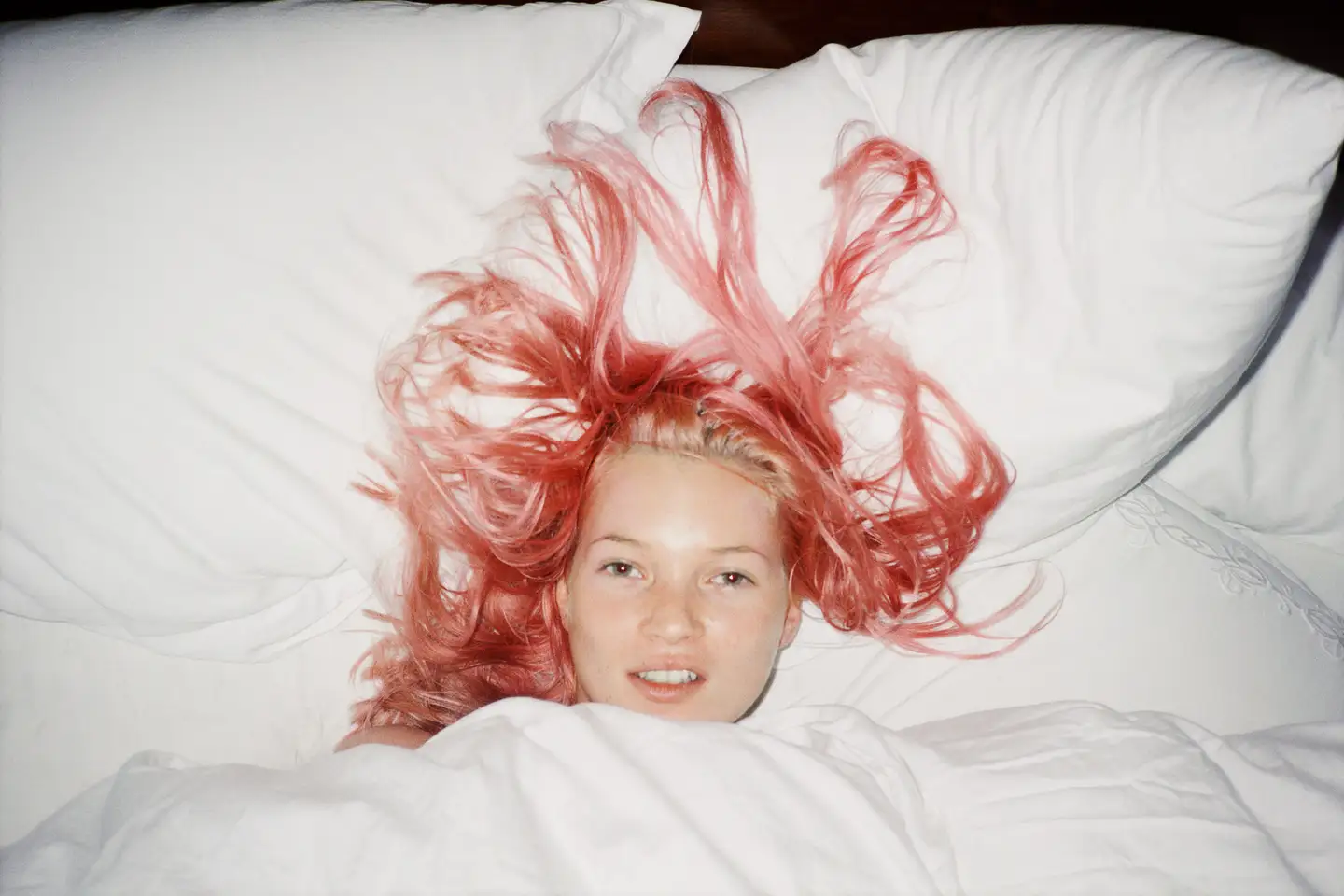
Juergen Teller, Young Pink Kate, London 1998. Image © Juergen Teller.
Tim Walker's Fairyland: Love and Legends at The National Portrait Gallery
I remember seeing Tim Walker’s Story Teller at Somerset House and being completely enchanted. It didn’t feel like a photography exhibition. It felt like stepping inside someone else’s imagination. It also arrived just as Instagram hit critical mass. Suddenly our feeds were filled with celebrities and fashion people attending exhibitions, almost like a live cultural news report telling you where you needed to be. You didn’t just see the show. You saw everyone seeing the show.
Now Walker returns with Fairyland: Love and Legends, a project created over five years celebrating queer activists, performers, artists and writers, with portraits including Chappell Roan, Hunter Schafer, Frank Ocean and Miriam Margolyes. What excites me isn’t simply the celebrity of it all. Walker has always built worlds, and this time he’s using that extraordinary visual language to create a queer mythology around identity, community and love. In an era where everyone is an image maker, creating a photograph that can still make us stop feels almost radical.
Tim Walker doesn’t photograph reality. He makes reality worth escaping into.
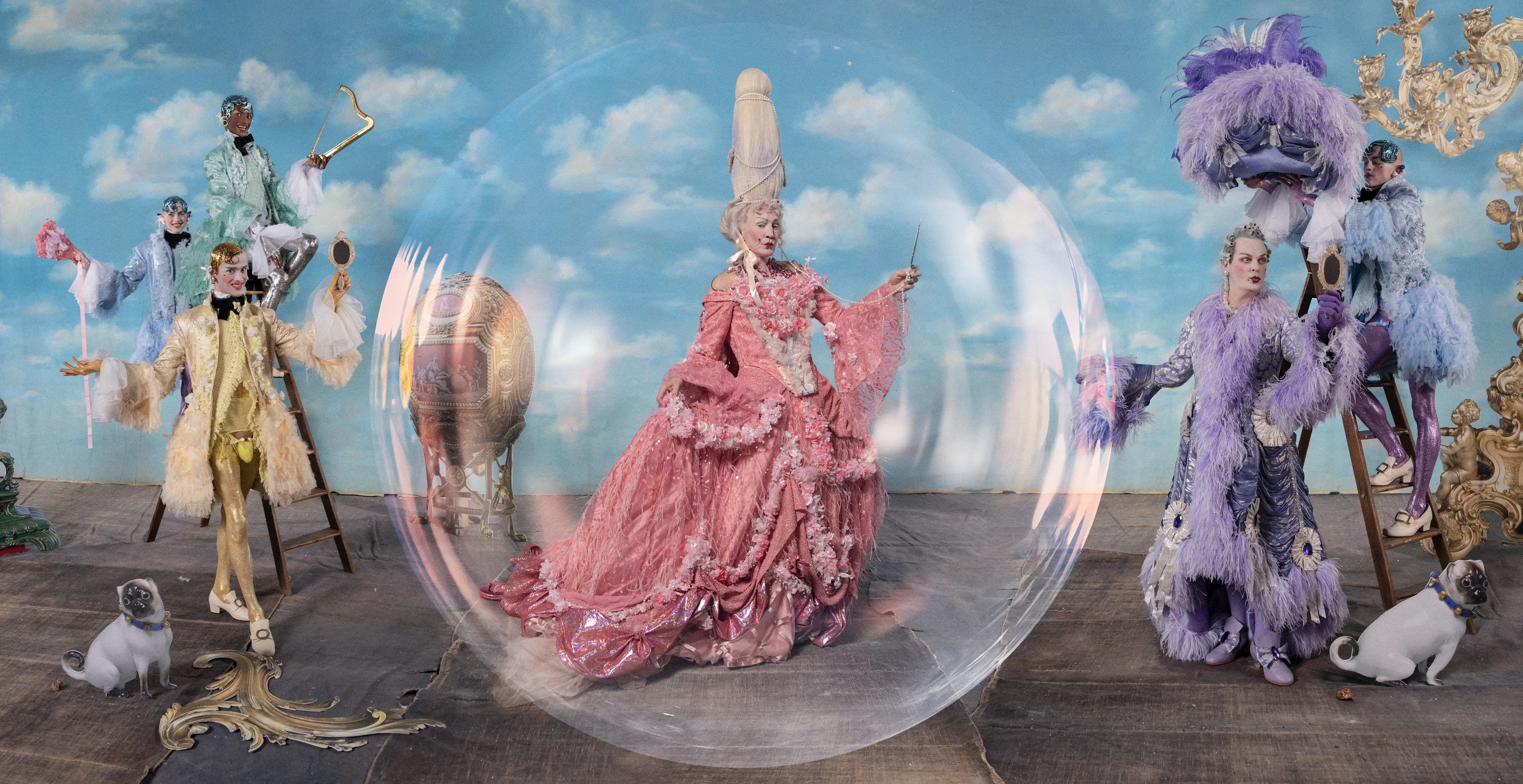
Tim Walker, Paul O’Grady and Julian Clary as the Glitter Queens, London 2022. Image © Tim Walker
Beyond the Tent | Frieze Week After Hours
Princess Julia is a cultural icon, but for me this one is personal. When I first moved to London, I desperately wanted to become a famous blogger. This was the iPhone 3 era, just to put it into perspective. Julia was one of the first people I ever approached and asked to blog about. She was probably quietly giggling at my naïveté, but she was incredibly sweet to me.
Years later, we’ve shared London Fashion Weeks, sat on panels together and somehow keep finding ourselves in the same rooms. Someone I once saw as part of this mythical London world has remained every bit as sweet, kind and generous as I imagined. And she still goes out more than I do. That’s why seeing her host GARGLE at Sadie Coles feels so perfect. Julia hasn’t simply witnessed decades of London fashion, nightlife, music and art. She is woven into them. Put her in a gallery with David Hoyle, Kai Isaiah Jamal, Charlie Porter, Kae Tempest, Joshua Woolford and Kurtis Lincoln and suddenly the distinction between artist, host, audience and artwork starts to disappear.
Very Warhol. Very London. Very Julia.
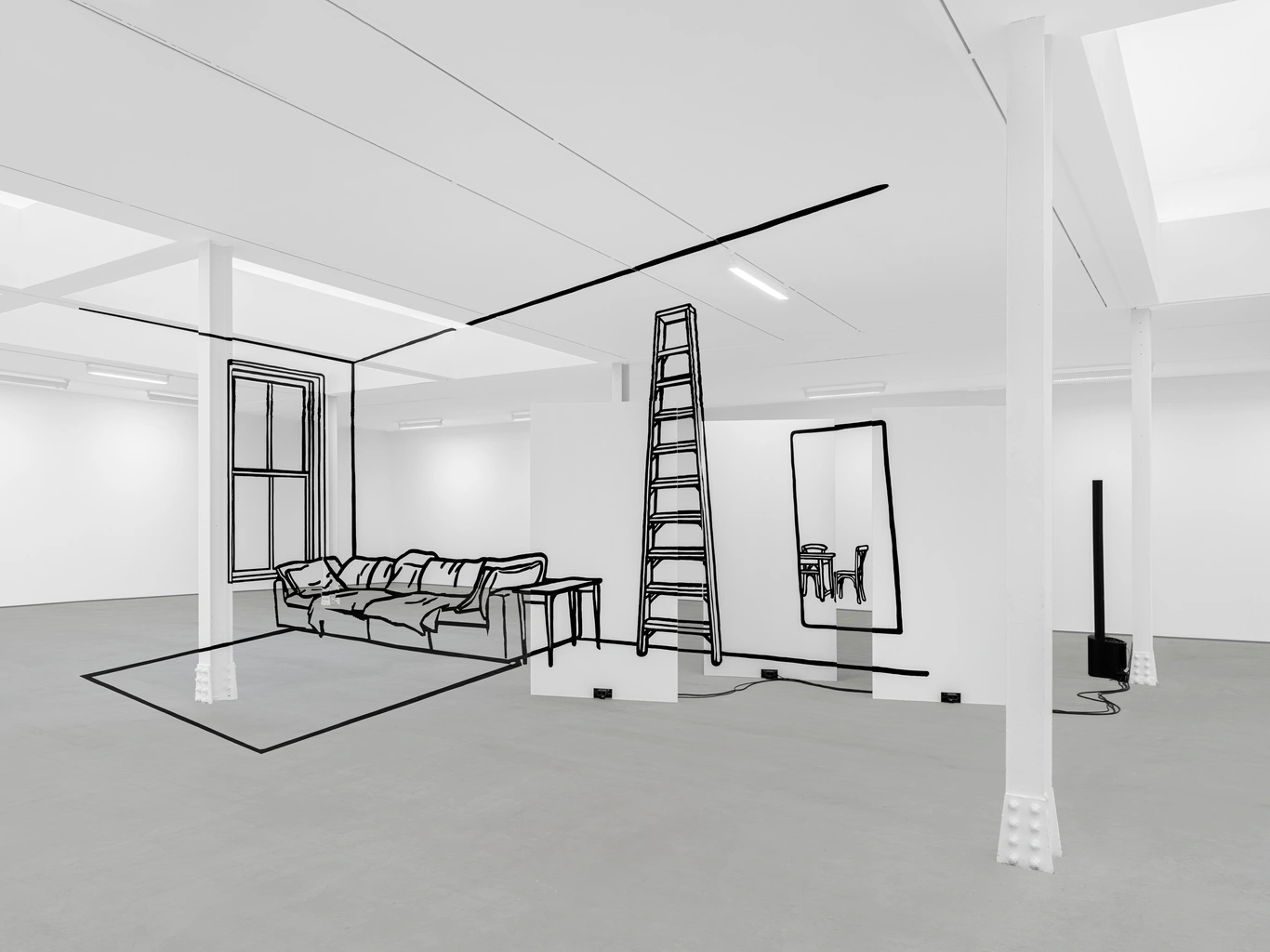
I’m increasingly interested in where art happens when you take it out of an art fair. Minor Attractions understands that culture doesn’t exist in neat little boxes. As part of its programme this year, BOYS! BOYS! BOYS! brings Simon Amstell into the conversation for an intimate live event. Simon is an OG comedian who turned our attention to revelations about queerness and mental health.
A queer photography platform. A comedian and filmmaker. An alternative art fair. An audience sitting together. Suddenly, the room becomes the artwork. For me, that’s what makes London’s cultural ecosystem interesting. The gallery, nightclub, fashion show, café, performance space and community centre don’t have to exist independently of one another. Sometimes putting the right people in the right room is the curatorial act.
This year I’m curating THE HANG, the official opening party for Minor Attractions, London’s alternative, self-described transgressive art fair running alongside Frieze Week. Minor Attractions interests me because it feels less concerned with behaving like a traditional art fair and more like a cultural hub. It brings together emerging and established galleries, artists and independent voices, while allowing the programme to spill beyond the booth and into the wider cultural life of London.
This year the fair takes over The Newman in Fitzrovia, transforming an entire floor of hotel rooms into gallery spaces. There’s something I love about that intimacy. Art out of the white cube, hanging where you would normally sleep, shower, order room service or all times of different affairs. Naturally. And then there’s THE HANG.
I’ve always believed some of the most interesting conversations around art happen after the fair closes. THE HANG is my attempt to take that entire ecosystem and put it on a dancefloor. Artists, gallerists, queers, DJs, fashion people, provocateurs and creatures of the night all becoming part of the same spectacle. It’s where the art escapes the walls. Because I don’t think art, fashion, music and nightlife are separate cultural worlds. The London I fell in love with was created precisely because those worlds kept colliding. For me, the party isn’t separate from the cultural programme. It’s what happens when the exhibition starts moving.
.png)
Keep reading

Providing auctioneers, auction software, and auction management services for commercial and charity fundraising auctions since 2017. Copyright The Auction Collective 2026
.svg)

.png)
.png)
.png)


.svg)